Human orientation
Average rating: independent and calm. Behavior depends on upbringing.
THE PAW CATALOG
Origin: Spain
Bred in the Pyrenees in northeastern Spain to protect livestock. Flocks went to high pastures in summer, and to lower ones in winter, and dogs protected them mainly from wolves.
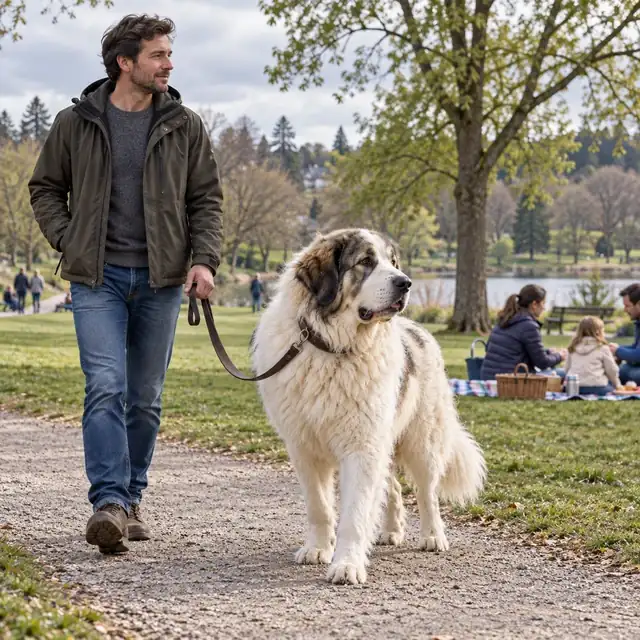
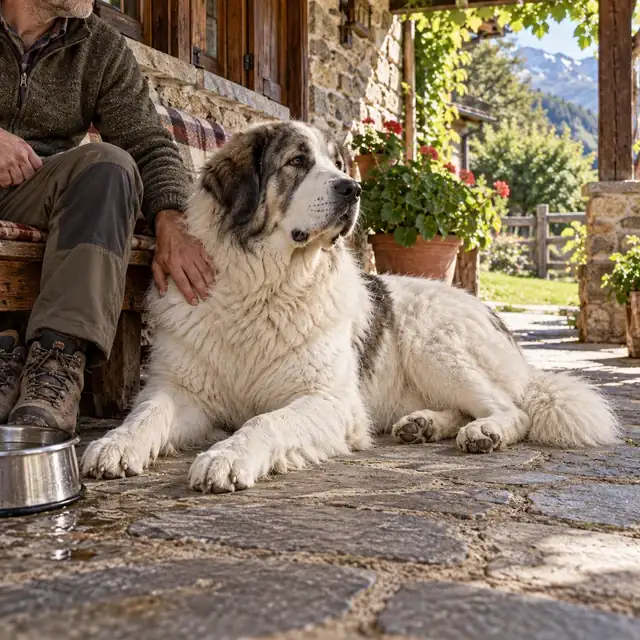
The Pyrenean Mastiff is a very large (72-81 cm) massive and muscular Spanish guard dog with a thick double coat. Independent, calm and balanced, but does not back down in front of strangers. Needs space, experienced owner and early socialization.

Suitable for families living on a site with a strong fence. Not suitable for an apartment.
Moderate: regular walks and space. Dosing during load growth.
Independent and calm, early socialization and basic obedience required. It cannot be taught by force.
The thick bristly coat is combed and combed weekly, bathed as needed. The folds on the face and ears are examined.
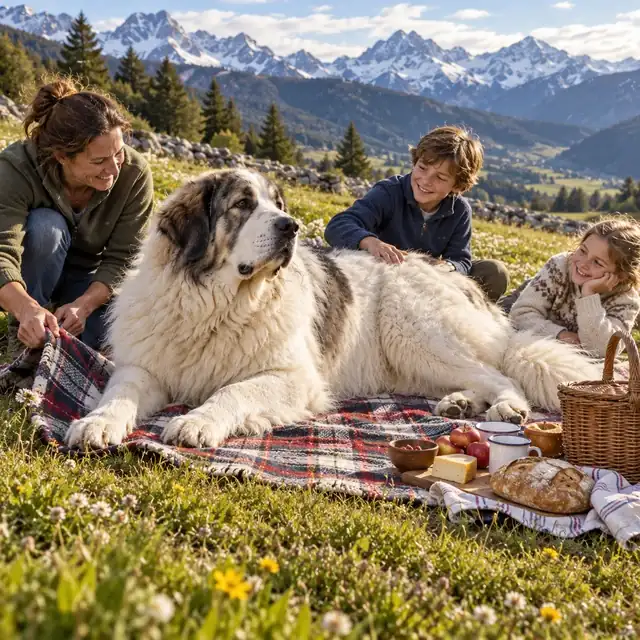
It is considered suitable for families living on their own plot. Because of the massiveness, contacts with children are under strict supervision.
An ideal protector of livestock. You can treat other people's dogs and people with care.
Estimates help compare breeds. For zooaggression, 5/5 means less tendency to aggression towards dogs. The behavior and health of a particular dog depend on many factors.
Average rating: independent and calm. Behavior depends on upbringing.
Medium-low rating: independent.
Average score: protector of livestock, wary of strangers.
There is no comparable survival estimate for the breed in the British cohort used. Among the described birth risks: dysplasia of the hip joints, bloating or twisting of the stomach, degenerative myelopathy; examination of the parents is confirmed with the veterinarian.
Medium-low grade: Thick coat needs weekly grooming.
Hip Dysplasia: The breeder is asked to confirm examinations of both parents. The weight is kept normal. If the dog is limping or reluctant to get up, it is examined by a doctor.
Bloating or stomach upset: feed several times a day in small portions, do not load the dog immediately after eating. An enlarged stomach and futile urges to vomit require urgent veterinary care.
Degenerative myelopathy: A progressive lesion of the spinal cord that an available genetic test can help detect. Ask the breeder for results.