Human orientation
Average rating: calm and stable. Behavior depends on upbringing.
THE PAW CATALOG
Origin: Romania
Raised in the Carpathians of Romania as a herd guardian. She is highly valued in her homeland. The UKC International Register recognized the breed on July 1, 2006.
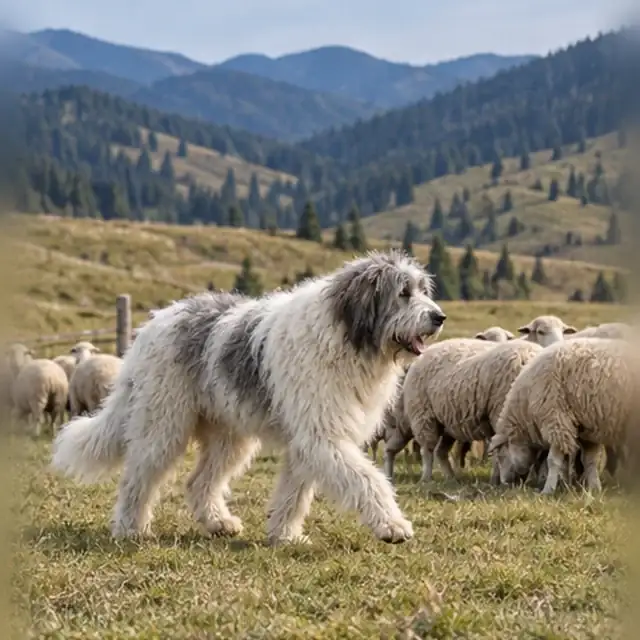
The Romanian Miorite Shepherd is a very large (65 to 75 cm) white, gray or spotted guard dog with a long, straight, stiff coat. Calm and stable, wary of strangers, very good with children. Requires an experienced owner and a large area.

This is a dog for a private plot with a strong fence, not for an apartment.
Moderate: space, walks and territory protection tasks.
Calm and stable, but independent. Early socialization and consistency are required. Malice and excessive timidity in the breed are undesirable.
Long hard wool with a thick undercoat is combed regularly, more often in shedding. Ears are examined, claws are trimmed.
Very good with children, but due to the size of contacts under supervision.
He bravely resists predators: bears, wolves and lynxes. She can be distrustful of other people's dogs.
Estimates help compare breeds. For zooaggression, 5/5 means less tendency to aggression towards dogs. The behavior and health of a particular dog depend on many factors.
Average rating: calm and stable. Behavior depends on upbringing.
Average score: independent.
Medium-low rating: strong guarding instinct.
There is no comparable survival estimate for the breed in the British cohort used. The absence of the mentioned risk does not prove the absence of hereditary diseases.
Low rating: Long coarse coat and size.
Breed screening: there are few descriptions of hereditary diseases of the "Romanian Miorite Shepherd" breed. Ask the breeder for the written results of the parents' examinations and the current requirements of the club.
Musculoskeletal apparatus: growth, weight and load of the "Romanian Miorite Shepherd" breed should correspond to the age. Pain, lameness, or reluctance to move require a veterinary examination.
Eyes and heart are checked during routine examinations. Narrow examinations, for example by an ophthalmologist or a cardiologist, are prescribed as needed. It is useful to keep the results in the veterinary passport.