Human orientation
Average score: sticks to people, but works independently on the hunt. Behavior depends on upbringing.
THE PAW CATALOG
Origin: Italy
The origin is unknown and probably ancient: similar dogs are depicted on Roman statues of Diana the Huntress, and similar skeletons were found in Lombard graves of the 7th century. In the Renaissance, they were actively used on lavish hunts. The breed club was created in 1920, but in 1939 it was disbanded, and by the end of World War II the breed had almost disappeared. A new society emerged in 1947, and the FCI finally recognized the breed in 1956.
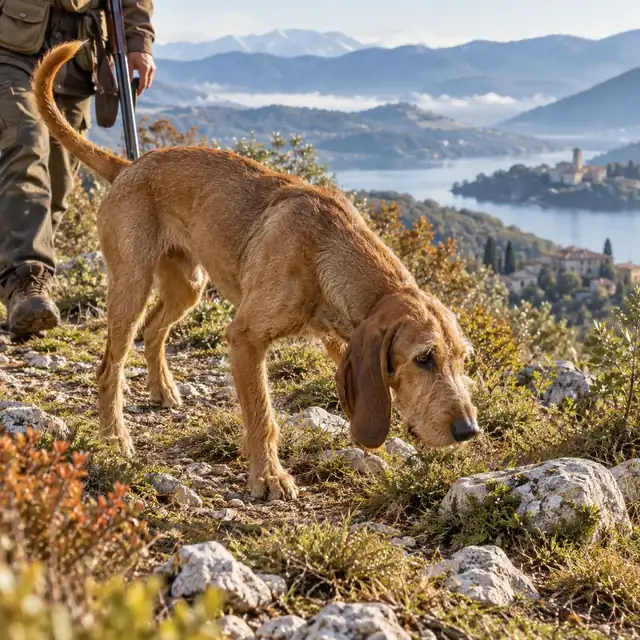
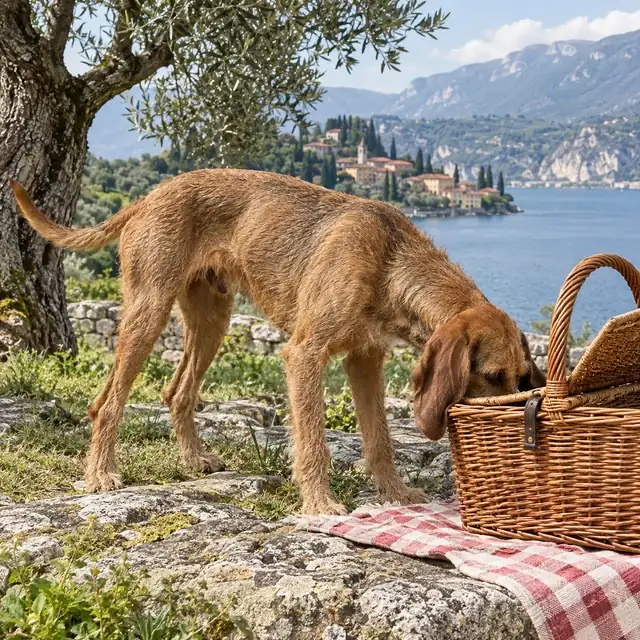
The hard-haired Italian Seguggio is an ancient Italian hound (50-60 cm, 18-28 kg) of almost square format with coarse short fur of fawn shades or black-tan color. Hardy, purposeful and loud on the trail. Needs a lot of space, work and a hunting owner or a very active family.
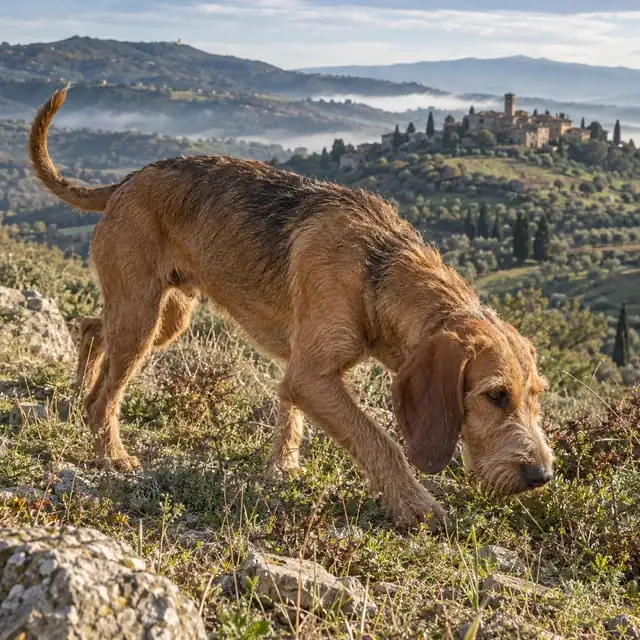
A hunter by calling, not a decorative companion. Segujo are increasingly kept as pets. Space, secure enclosure and long daily outings are required.
Can work in the field for up to twelve hours. Long walks, sniffing and free running in a safe area are required.
A fine sense of smell and purposefulness make him deaf to commands on the trail. Recall is practiced from puppyhood, and smell games help direct instinct.
Coarse short hair is combed once a week. Ears are examined after walks, nails are trimmed, teeth are cleaned.
There are few detailed descriptions of behavior with children, so acquaintance is built gradually and under supervision. The energy and loudness make it less suitable for very young children.
Can work alone, in small groups or in a pack. He not only catches up with prey, but also kills it, so small animals are a real goal for him.
Estimates help compare breeds. For zooaggression, 5/5 means less tendency to aggression towards dogs. The behavior and health of a particular dog depend on many factors.
Average score: sticks to people, but works independently on the hunt. Behavior depends on upbringing.
Average score: purposeful, but instinct is stronger than command.
Average score: small animals are prey for him, need control.
There is no comparative survival assessment of the Italian Seguggio Hardcoat breed in a British cohort. The absence of said risk does not prove the absence of hereditary diseases, so screening of parents is important.
Average score: Coarse short coat is easy, but long walks and ear checks take time.
Pedigree screening: There is little reliable data on the hereditary diseases of the Italian Seguggio breed, so the results of examinations of both parents should be requested in writing.
Musculoskeletal system: height, weight and load of the "Hard-coated Italian Segujo" breed should correspond to the age. Pain, lameness, or reluctance to move require a veterinary examination.
A preventive examination includes the eyes, heart and ears. For the "Hard-coated Italian Segujo" breed, the frequency of special inspections is determined by the advice of the club and the veterinarian.