Human orientation
Average rating: attached to the family, but independent. Behavior depends on upbringing.
THE PAW CATALOG
Origin: The Netherlands
In the early 1930s, Leendert Saarloos in the Netherlands began crossing German Shepherds with wolves to create a hardy and independent companion. The breed was briefly considered as a handler, but proved unsuitable due to its caution and reticence. UKC recognized it in 2006. In the FCI classification, it belongs to group 1.
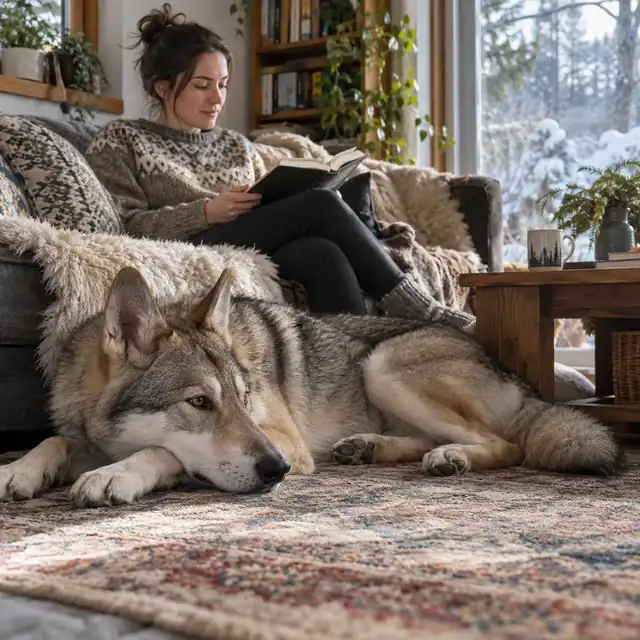
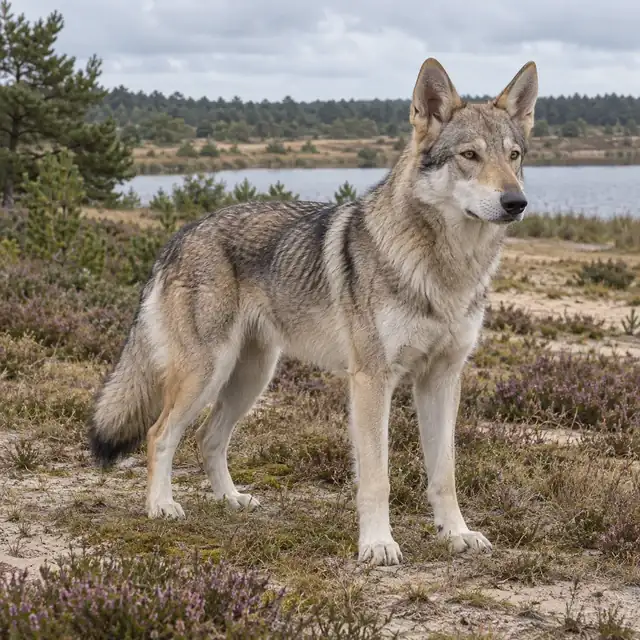
The Saarloos wolfdog is a large (61-76 cm, 30-41 kg) wolf-like dog with a thick double coat. Lively, independent, attached to the family, but cautious and wary of strangers. Requires an experienced owner, thorough socialization and space.

This is a dog for an experienced owner with a spacious area, with a strong fence that the dog will not jump over. Does not tolerate loneliness and neglect.
High: physical and mental stress, long walks or running every day. Prone to vagrancy, so a fence is needed.
Independent, cautious and alert to new things. Careful early socialization, patience and gentle methods are required. Careful socialization helps to reduce defensive defensive aggression.
The wool is combed several times a week, more often during abundant molting in summer and autumn. Claws are trimmed, ears are cleaned, teeth are taken care of.
Attached to his family and protective of it, but cautious. Due to energy and mistrust, contacts with children, especially strangers, are under supervision.
In a noisy home or around other animals, they may need help with socialization.
Estimates help compare breeds. For zooaggression, 5/5 means less tendency to aggression towards dogs. The behavior and health of a particular dog depend on many factors.
Average rating: attached to the family, but independent. Behavior depends on upbringing.
Medium-low rating: cautious and independent.
Medium-low rating: needs thorough socialization.
There is no comparable survival estimate for the breed in the British cohort used. The absence of the mentioned risk does not prove the absence of hereditary diseases.
Average score: thick coat, but the main challenge is behavior.
Breed screening: detailed data on hereditary diseases of the Saarlus lupus breed are scarce. Ask the breeder for documentary results of examinations of both parents and current recommendations of the club.
Musculoskeletal system: the growth and load of the Saarluss Lupus breed should be age-appropriate. Lameness, pain, or reluctance to move require a veterinary examination.
The condition of the eyes and heart is included in the routine examination. Narrow examinations, for example by an ophthalmologist or a cardiologist, are prescribed as needed. It is useful to keep the results in the veterinary passport.