Human orientation
Tied to the owner, but works independently on the hunt.
THE PAW CATALOG
Origin: Sweden
Swedish breed. At the first dog show in Sweden in 1886, about 189 hounds were exhibited, among which were the brother and sister Tamburini and Ralla 1 peasant Per Schiller. They descended from the hounds of the Kaflos estate, presumably from Southern Germany. The breed was improved with the help of Swiss hounds and a significant share of British, mainly harriers. A dog of the same type was quickly formed, dominated by the continental type. The Swedish Kennel Club recognized the breed in 1907.
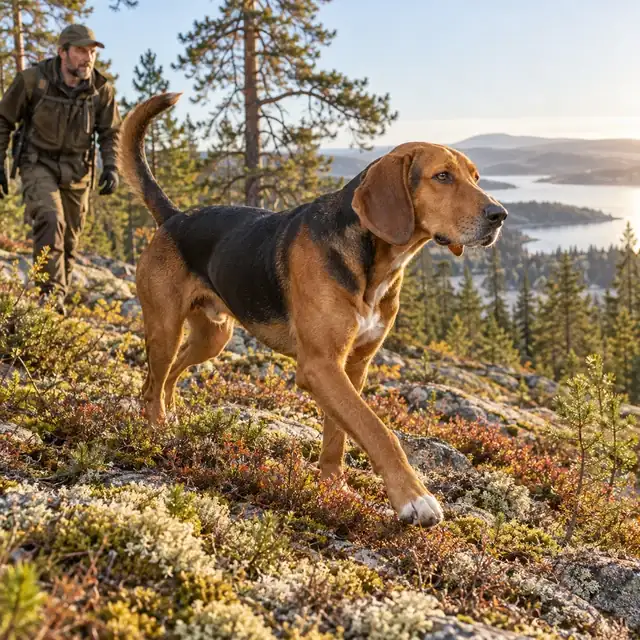
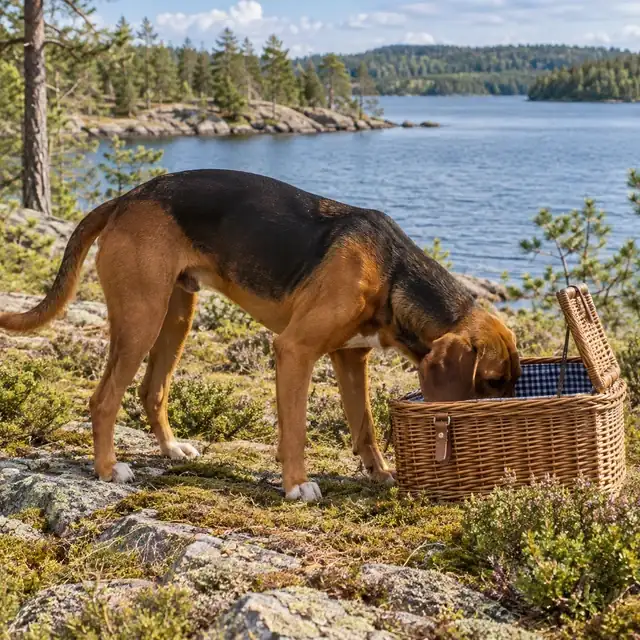
Schillerstevare is an average Swedish Hound: males 53-61 cm (ideal 57 cm), bitches 49-57 cm (ideal 53 cm). Lively and attentive, with a clear black coat on a red background. Keeps the voice on track. A hunting dog for hare and fox that works independently. Not suitable for urban life without hunting and movement.

Best suited for hunters and people who live outside the city with a large fenced area. Prolonged loneliness is undesirable. A loud voice creates difficulties in an urban environment.
High Long daily walks, running in a safe area, olfactory work.
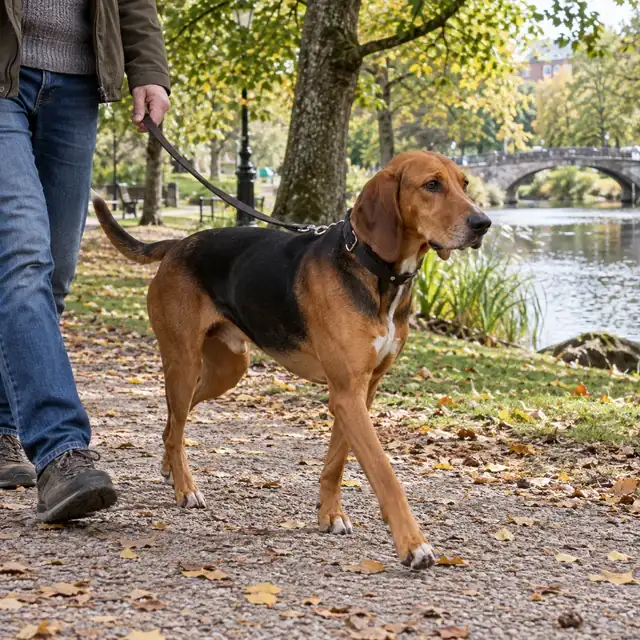
Lively and attentive, but the sense of smell prevails over commands. Recall is trained from an early age, kept without a leash only in a safe area. Classes are short, with a reward.
Coarse, not too short hair that fits tightly to the body needs brushing once a week. Long ears are regularly cleaned. After hunting, paws and skin are checked.
Usually friendly. Due to their size and energy, children and dogs are supervised. Children are taught not to tease and to behave calmly.
It is not a pack hound, so it hunts independently. Small animals are perceived as prey. It usually gets along with dogs after early socialization.
Estimates help compare breeds. For zooaggression, 5/5 means less tendency to aggression towards dogs. The behavior and health of a particular dog depend on many factors.
Tied to the owner, but works independently on the hunt.
Attentive, but the sense of smell is distracting; recall requires patient work.
Perceives small animals as prey, generally gets along with dogs.
There is no comparable survival estimate for the breed in the British cohort used. The absence of the mentioned risk does not prove the absence of hereditary diseases.
The coat is coarse and simple, but the ears and paws need inspection.
Breed screening: there are few descriptions of hereditary diseases of the Schillerstevare breed. Ask the breeder for the written results of the parents' examinations and the current requirements of the club.
Musculoskeletal system: the growth and load of the Schillerstevare breed dog are coordinated with its age. If lameness or pain occurs, a veterinary examination is required.
Heart and eyes are included in the list of annual examination. The schedule of in-depth checks is coordinated with the veterinarian and the breed club. Do not delay new symptoms, such as blurred vision or shortness of breath, until your next appointment.