Human orientation
Very devoted to the family, needs constant closeness with it.
THE PAW CATALOG
Origin: Great Britain
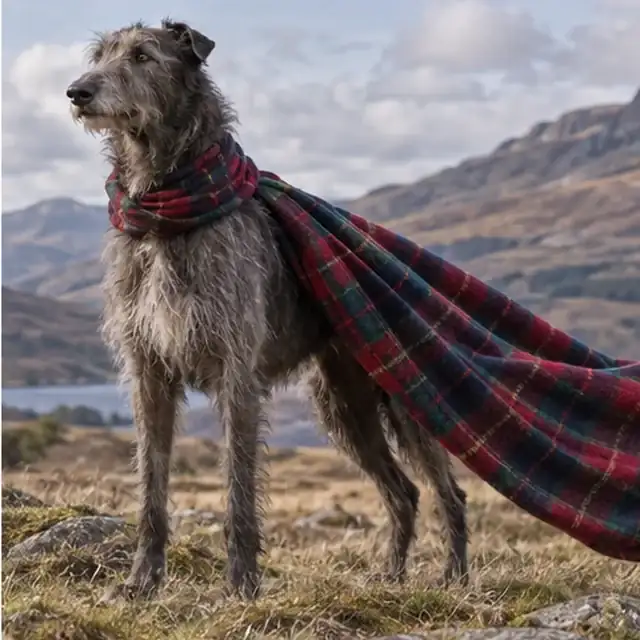
Formed over hundreds of years in the Scottish Highlands and Western Isles to track and hunt red deer, combining speed with endurance. Today it is primarily a companion.
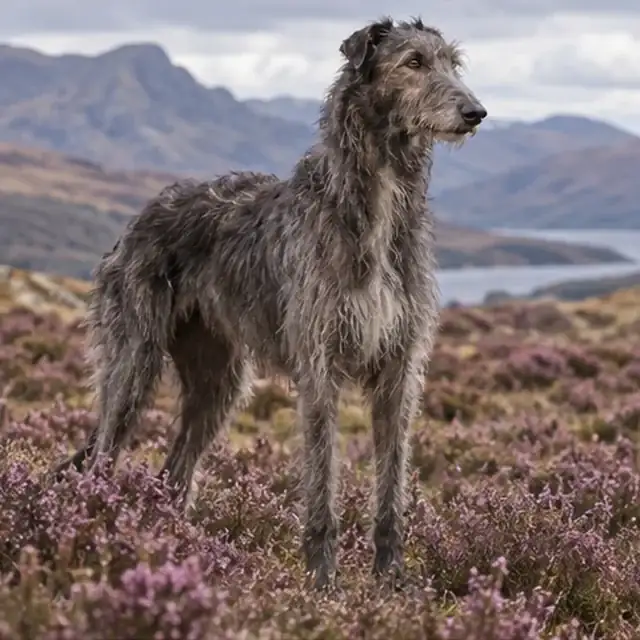
The Scottish Deerhound is a very tall (males about 76 cm and 45 kg, bitches about 71 cm and 36 kg) hard-haired greyhound. Gentle, friendly, good-natured and quietly dignified; a brave hunter, but calm at home. Loyal to his family and can feel rejected if he is kept only in the yard.

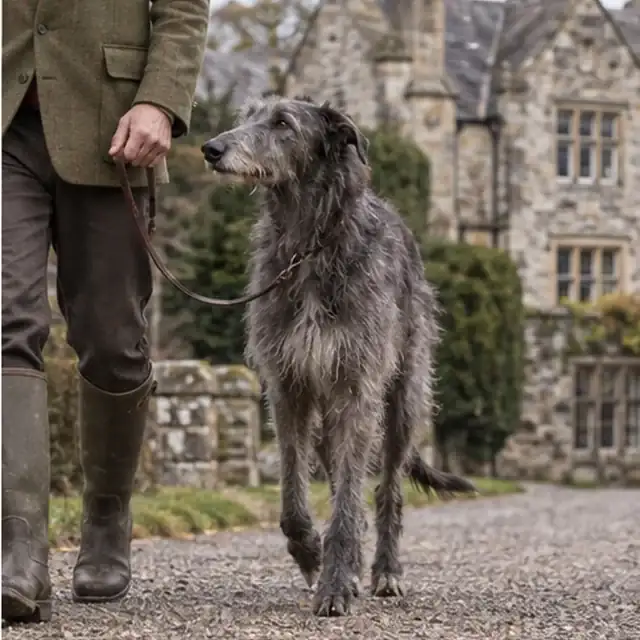
Suitable for families living in a spacious house with a large fenced area. Needs a long daily walk and opportunity to run. Not suitable for life in the yard apart from the family. Unhappy in a cramped apartment without movement.
High A long daily walk, regular opportunities to run and a large fenced area. Does not need endless movement, but sprinting is natural for him.
Obedient and easy to learn, but bored from monotonous exercises, so classes should be varied. Basic obedience and early socialization are a must. Due to the hunting instinct, the recall is trained from a young age.
Thick hard wool needs moderate care: combing once a week and infrequent bathing. Ears, teeth and claws are examined regularly. The beard needs to be wiped after eating and drinking.
Gentle and good-natured, but due to the size and weight, children and the dog are under the supervision of an adult. Children are taught not to climb on a dog and not to pull its fur.
Generally gets along well with pets, but its hunting instinct may cause it to chase small animals that run past. Off-leash walking only in a fenced area.
Estimates help compare breeds. For zooaggression, 5/5 means less tendency to aggression towards dogs. The behavior and health of a particular dog depend on many factors.
Very devoted to the family, needs constant closeness with it.
Obedient, but bored by monotony.
Generally gets along well with animals, but chases small ones.
In the British cohort, the median lifespan of the breed was 10.5 years. Among the described congenital risks: cardiomyopathy, bloating or gastric volvulus, portosystemic shunt; examination of the parents is confirmed with the veterinarian.
Hard wool requires moderate care.
Cardiomyopathy: a disease of the heart muscle. Coughing, rapid fatigue, fainting or shortness of breath require immediate veterinary attention. A heart examination of the parents is requested from the breeder.
Bloating or stomach upset: feed several times a day in small portions, do not load the dog immediately after eating. A swollen, hard stomach, restlessness and futile urges to vomit are a reason to go to the clinic immediately.
Portosystemic shunt: A congenital disorder of hepatic blood flow that manifests as growth retardation, behavioral changes, and unsteadiness. The results of the parents' examinations are requested.