Human orientation
High score: loyal and kind. Behavior depends on upbringing.
THE PAW CATALOG
Origin: Serbia
It comes from Serbia and is related to other Balkan hounds. In 1946, it was confirmed as a separate breed, not a variety of the Serbian Hound, and the first standard was drawn up. It was shown at the Belgrade International Exhibition in June 1950, and the FCI recognized the breed in 1961. In the FCI classification, it belongs to group 6.
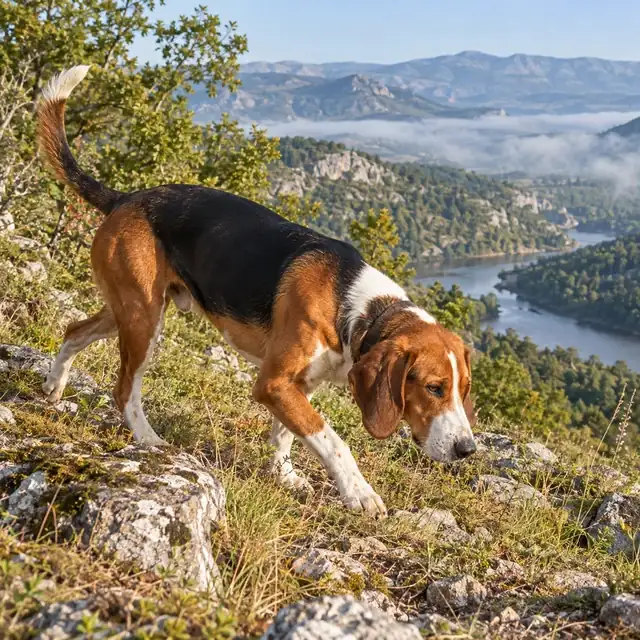
The Serbian Tricolor Hound is a medium (44-55 cm) hound with a short, shiny red coat with a black top and white markings. Loyal, kind, lively and very persistent. Needs a lot of movement and space.

Suitable for hunters and very active owners. Not suitable for an apartment.
High: Long walks, running and sniff work every day.
Reliable and very persistent in work, but the sense of smell prevails over commands. Patience and reliable fencing are required. Aggressiveness or excessive timidity in the breed is undesirable.
Short dense wool is combed once a week. Hanging ears are examined, claws are trimmed.
Kind and loyal, but energetic. Contacts with children under supervision.
He works in a pack, so he usually gets along with dogs. Small animals are prey.
Estimates help compare breeds. For zooaggression, 5/5 means less tendency to aggression towards dogs. The behavior and health of a particular dog depend on many factors.
High score: loyal and kind. Behavior depends on upbringing.
Average score: the sense of smell is distracting.
Average score: works in a pack, small animals are prey.
There is no comparable survival estimate for the breed in the British cohort used. The absence of the mentioned risk does not prove the absence of hereditary diseases.
High score: short coat.
Breed screening: there are few descriptions of hereditary diseases of the "Serbian tricolor hound" breed. Ask the breeder for the written results of the parents' examinations and the current requirements of the club.
Musculoskeletal system: growth, weight and load of the breed "Serbian tricolor hound" should be appropriate for age. Pain, lameness, or reluctance to move require a veterinary examination.
Heart and eyes are included in the list of annual examination. Narrow examinations, for example by an ophthalmologist or a cardiologist, are prescribed as needed. It is useful to keep the results in the veterinary passport.