Human orientation
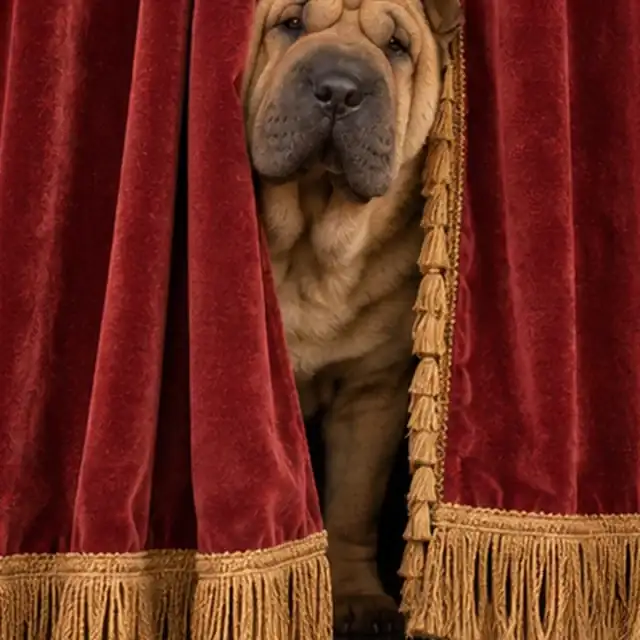
Devoted to family, reserved with strangers.
THE PAW CATALOG
Origin: China
The breed comes from China. Historically a farm dog for herding and guarding, it is also called the "dog of the tombs" because of the ancient Shar Pei-like statues. Breeding was banned in China in 1947 when tax increases made keeping dogs a luxury. This put the breed on the verge of extinction.
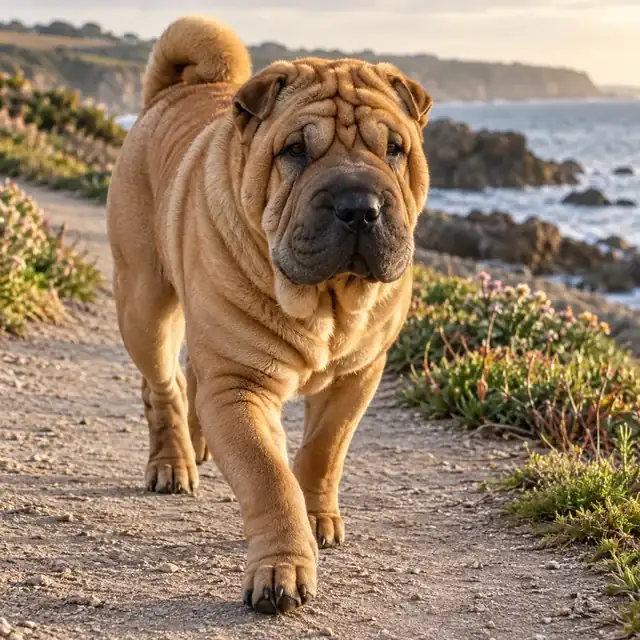
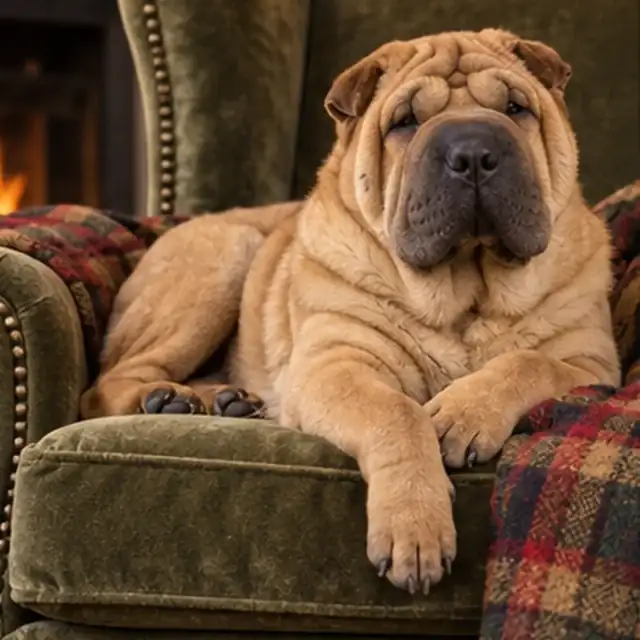
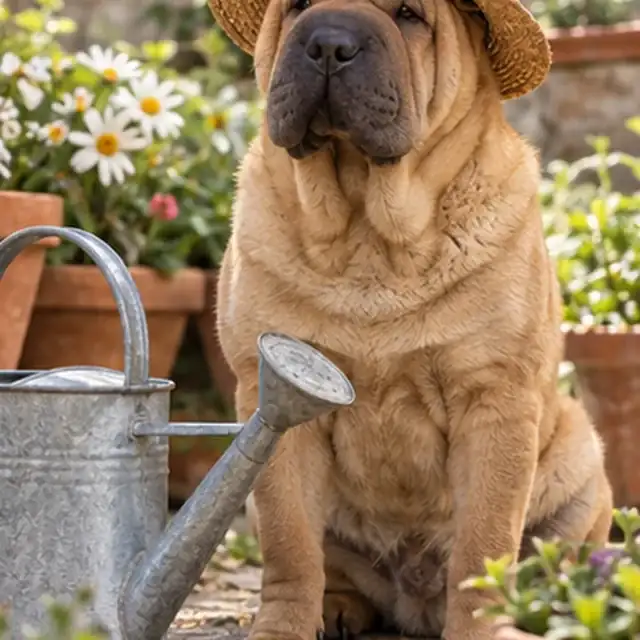
Shar Pei is a medium (46-51 cm) stocky dog with coarse short hair and characteristic skin folds. Intelligent, devoted to family, reserved or aloof with strangers, calm and dignified. The name is usually explained as "sandskin" because of the stiff coat. He studies well, likes to please his master. Needs careful care of eyes, ears and skin.
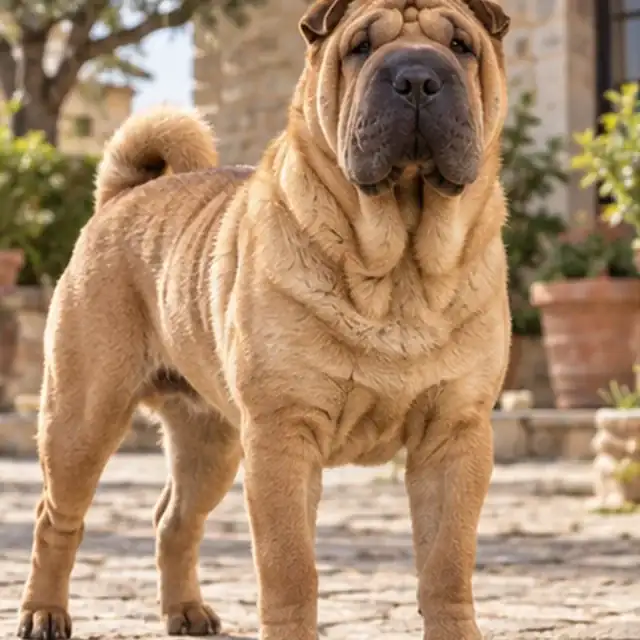
It feels good both in the village and in a suburban house, it is equally happy indoors and outdoors. He likes peace, a stable regime and closeness to his family. The heat is hard for him, he needs coolness and water in the summer.
Moderate Daily walks and games. Flexible in terms of lifestyle, but in the heat the load is reduced.
Willingly works with humans and performs obedience exercises well. Early socialization is a must, especially with strangers and dogs. Classes are short, consistent, with a reward. Every dog needs basic obedience.
A bristle brush is used every other day. Bathe about once a month or when the dog is dirty or smelly. Nails grow quickly, they are trimmed often, small ears are cleaned regularly. Folds are checked for moisture and irritation, eyes are examined.
Usually devoted to his family. Children and the dog are always supervised by an adult. Children are taught not to go near the dog while eating and resting.
Does not seek fights with other animals, but will respond decisively if provoked. Early socialization helps avoid conflicts with dogs, especially dogs of the same sex.
Estimates help compare breeds. For zooaggression, 5/5 means less tendency to aggression towards dogs. The behavior and health of a particular dog depend on many factors.
Devoted to family, reserved with strangers.
He willingly studies when there are few classes and they are consistent.
Does not look for quarrels, but resolutely responds to provocation.
In the British cohort, the median lifespan of the breed was 10.6 years. Among the described congenital risks: glaucoma, eyelid droop, eye diseases; examination of the parents is confirmed with the veterinarian.
The coat is short, but the folds, eyes and ears require regular attention.
Glaucoma: Increased intraocular pressure causes pain and can lead to vision loss. Redness, cloudiness or squinting of the eye require immediate veterinary examination.
Eyelid rolling (entropion): The eyelids roll inward and irritate the cornea. Tearing, squinting or redness of the eye requires a veterinary examination.
Eye diseases: the condition of the eyes is periodically evaluated by a veterinary ophthalmologist. Squinting, redness, or cloudy corneas require examination, not waiting. The results of the eye examinations of the parents are requested from the breeder.