Human orientation
Average rating: devoted to family, but reserved. Behavior depends on upbringing.
THE PAW CATALOG
Origin: Great Britain
Named after the Isle of Skye in Scotland. This is the oldest Scottish breed of terriers, known since the 14th century; at first it hunted otters and badgers, and now it is rare in the world. The most famous sky terrier is Greyfriars Bobby.
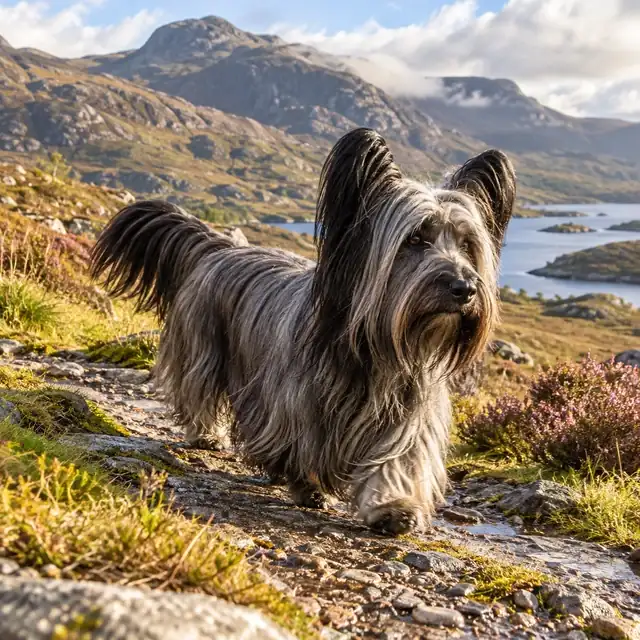
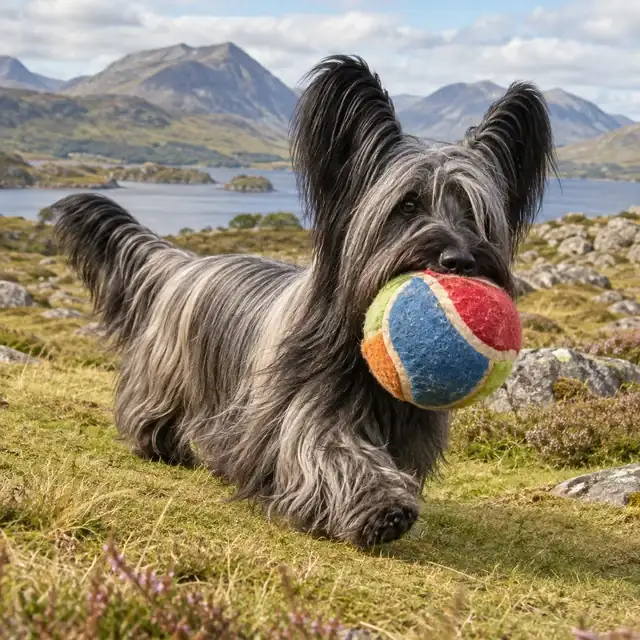
The Skye Terrier is a short (about 25 cm at the withers) long Scottish terrier with a long, striking double coat. Restrained, distrustful of others, strong-willed; devoted to one person or family. Requires weekly grooming and thorough socialization.

Suitable for quiet families with adults or older children. It is suitable for both a suburban house and an apartment for daily walks. Without toys and activities, he gets bored and destroys things.
A daily walk is recommended. Toys are needed alone, because boredom leads to destruction.
Strong-willed and stubborn. Early full socialization is mandatory. Classes are short, with a reward.
The wool is combed weekly so that the undercoat does not stray, bathed approximately once every two weeks. The fur above the eyes is not trimmed: the dog can see well through it.
Does not like to be pulled by the tail. Small children are not left unattended, adult owners are best.
Rabbits, cats and chickens are not suitable: the skye terrier will not resist. Gets along with dogs if he grew up together; opposite-sex couples are usually more peaceful.
Estimates help compare breeds. For zooaggression, 5/5 means less tendency to aggression towards dogs. The behavior and health of a particular dog depend on many factors.
Average rating: devoted to family, but reserved. Behavior depends on upbringing.
Average score: stubborn.
Medium-Low Score: Hunting Instinct.
In the British cohort, the median lifespan of the breed was 12.4 years; small sample: 39 deaths. Among the described breed risks: dysplasia of the hip joints, dislocation of the patella, allergic skin diseases; examination of the parents is confirmed with the veterinarian.
Low rating: Long double coat requires weekly grooming.
Hip Dysplasia: Parents look at joint health before choosing a puppy. Excess weight increases the load on the joints, so the puppy should not be overfed. If the dog is limping or reluctant to get up, it is examined by a doctor.
With dislocation of the patella, the dog suddenly bends its hind leg while walking. Mild forms are often only controlled, and severe ones may require surgery. Excess weight is removed because it increases the load.
Allergic skin diseases: itching, redness and baldness require a veterinary examination.
Autoimmune diseases: unexplained skin disorders, weight loss or weakness require veterinary examination.