Human orientation
Very High Rating: Closely related to hunter and family. Behavior depends on upbringing.
THE PAW CATALOG
Origin: Germany
It comes from the outskirts of Münster in Germany and is believed to be more than 500 years old: ancestors are known from the 13th-14th centuries. The nobility used early dogs to raise game for falconers. In the 19th century, the breed almost disappeared, it was kept by peasant families. At the end of the 19th century, a revival began, and around 1900, Edmund Lons found dogs of two lines in Lower Saxony. Later, she was formed as a retriever for land and water. In Great Britain, the Kennel Club recognized it as an imported breed in 2006.
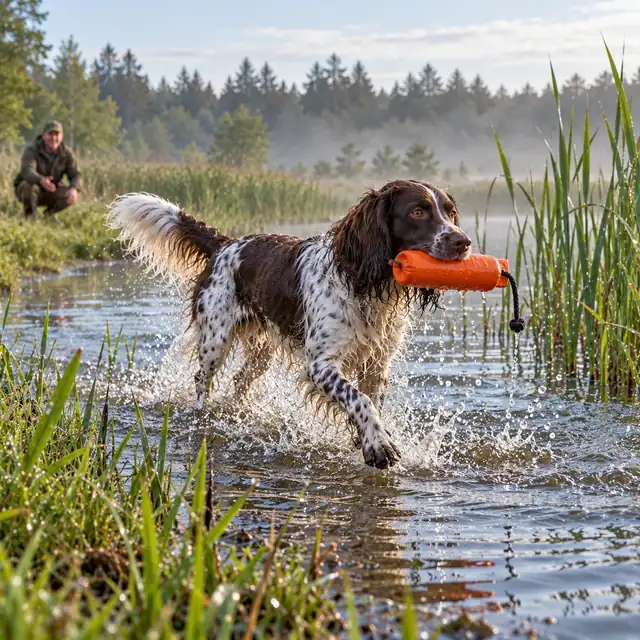
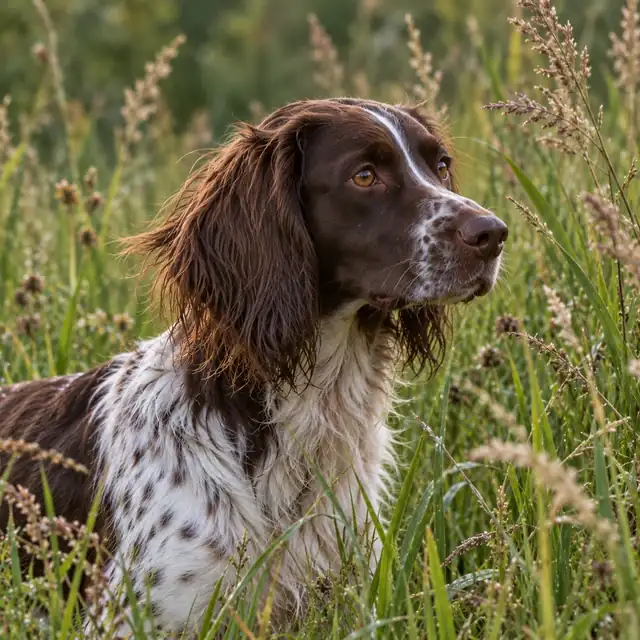
The Small Münsterlander is a versatile German hunting dog of medium size (50-56 cm, 17-26 kg) with a medium-length, dense, shiny coat: large brown spots on a white background. Intelligent, devoted to the hunter and family, works on land and in water. Requires at least an hour of serious movement per day.
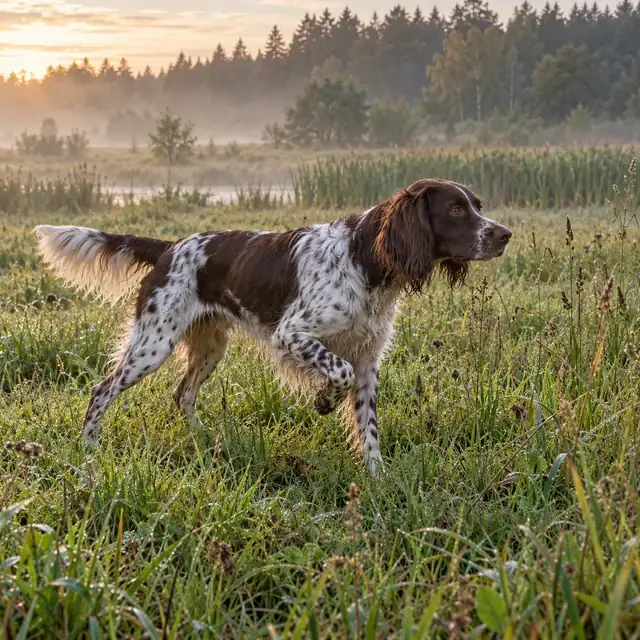
This is a hunter who feels best in an active family. Not suitable for life in an enclosure: strongly attached to people.
An hour or more of intense daily activity is needed: running, swimming, fetching. In the field, he usually works very close to the hunter.
Very intelligent and willing to learn, but needs a patient, gentle approach. Inconsistent owners can be tested. Hunting, olfactory and fetching classes are suitable.
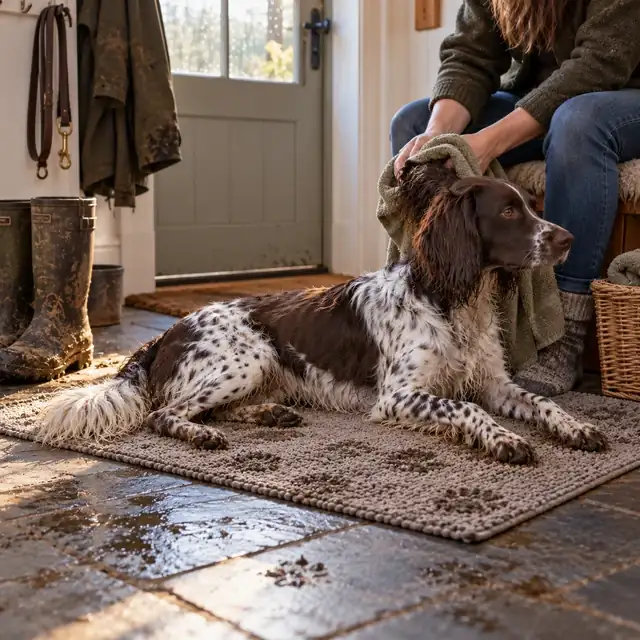
The wool is combed once a week, more often during the shedding period. After bathing in water, the ears are dried and examined. Claws are trimmed, teeth are cleaned.
Attached to the family and affectionate. Vigorous games with children are supervised.
The hunting instinct is strong, but it usually gets along with cats. Small animals and birds can attract it.
Estimates help compare breeds. For zooaggression, 5/5 means less tendency to aggression towards dogs. The behavior and health of a particular dog depend on many factors.
Very High Rating: Closely related to hunter and family. Behavior depends on upbringing.
High Score: Very intelligent, but needs patient consistency.
Average score: usually gets along with cats, strong hunting instinct.
There is no comparable survival estimate for the breed in the British cohort used. The absence of the mentioned risk does not prove the absence of hereditary diseases.
Medium-high rating: medium length coat needs regular brushing.
Pedigree Screening: There is little reliable data on the hereditary diseases of the Miniature Münsterlander, so the results of examinations of both parents should be requested in writing.
Musculoskeletal system: growth, weight and load of the "Small Münsterlander" breed should correspond to its age. Pain, lameness, or reluctance to move require a veterinary examination.
The condition of the eyes and heart is included in the routine examination. The schedule of in-depth inspections is coordinated with the veterinarian and the breed club.