Human orientation
Medium-high rating: strongly attached to the owner. Behavior depends on upbringing.
THE PAW CATALOG
Origin: Switzerland
Native breeds are very ancient: a mosaic from Aventicum depicts pack hounds similar to Swiss ones in Roman Helvetia. Italian and later French hunters valued them for hare hunting. French hounds brought by mercenaries could influence the line. Standards for five varieties were adopted in 1882 and revised in 1909, when the Turgau Hound disappeared. A single standard for four varieties was introduced in 1933.
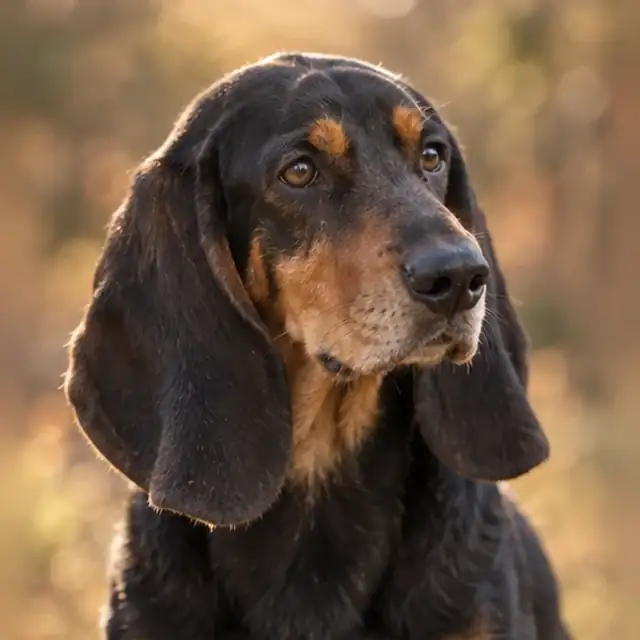
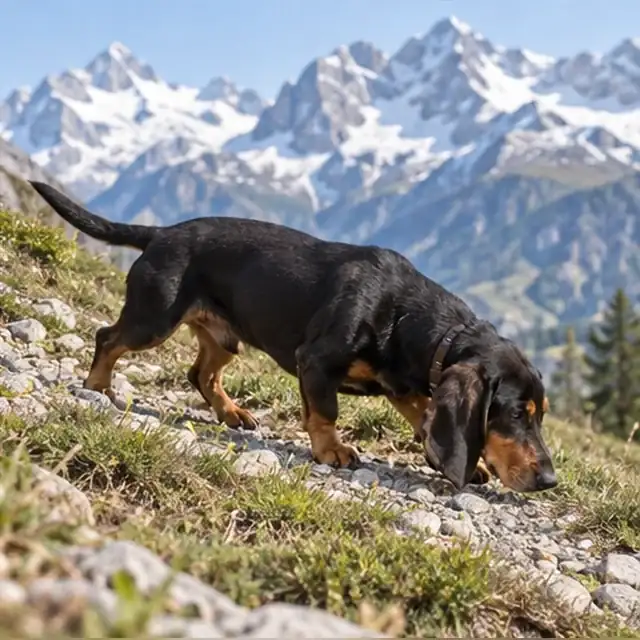
The Small Swiss Hound is a medium (47-59 cm) Swiss Hound with a short smooth dense coat of four varieties: Bernese, Jura, Lucerne and Swiss. Lively, passionate hunter, sensitive and very attached to the owner. Requires long movement and olfactory work.

Suitable for hunters or very active owners. It works independently, giving a loud voice, so it is not recommended for an apartment.
Long walks and sniff work are required. Works tirelessly even on difficult terrain.
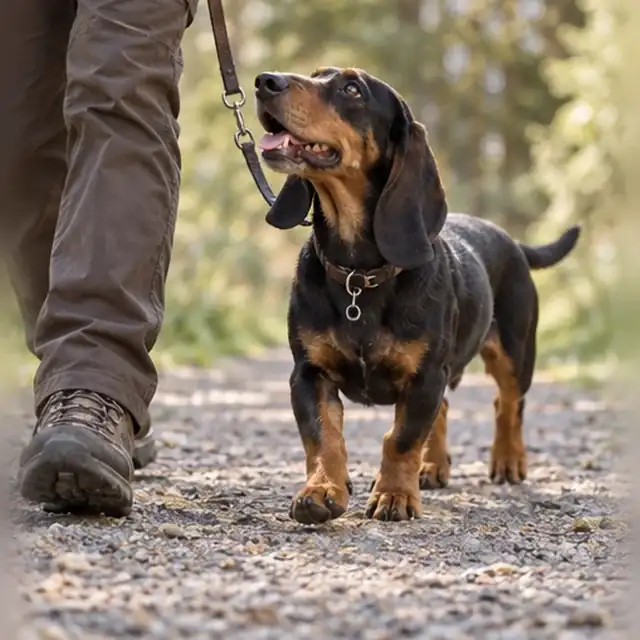
Sensitive and obedient, but the hunting zeal and sense of smell prevail. A gentle approach, patience and a reliable leash are required.
The short coat is wiped and combed once a week. Long hanging ears are examined especially, claws are trimmed, teeth are cleaned.
Sensitive and gentle, but his enthusiasm and voice make him not the calmest neighbor. Games with children are supervised.
Accustomed to the pack, so he gets along with dogs in general. Small animals for the prey hunter.
Estimates help compare breeds. For zooaggression, 5/5 means less tendency to aggression towards dogs. The behavior and health of a particular dog depend on many factors.
Medium-high rating: strongly attached to the owner. Behavior depends on upbringing.
Average score: Obedient and sensitive, but sense of smell prevails over commands.
Average score: get along in a pack, small animals are prey.
There is no comparable survival estimate for the breed in the British cohort used. The absence of the mentioned risk does not prove the absence of hereditary diseases.
High rating: short coat requires minimal maintenance.
Breed screening: there are few descriptions of hereditary diseases of the Small Swiss Hound breed. Ask the breeder for the written results of the parents' examinations and the current requirements of the club.
Musculoskeletal system: the growth and load of the Miniature Swiss Hound breed should be age-appropriate. Lameness, pain, or reluctance to move require a veterinary examination.
During preventive visits, the veterinarian checks the eyes and the heart. The schedule of in-depth checks is coordinated with the veterinarian and the breed club.