Human orientation
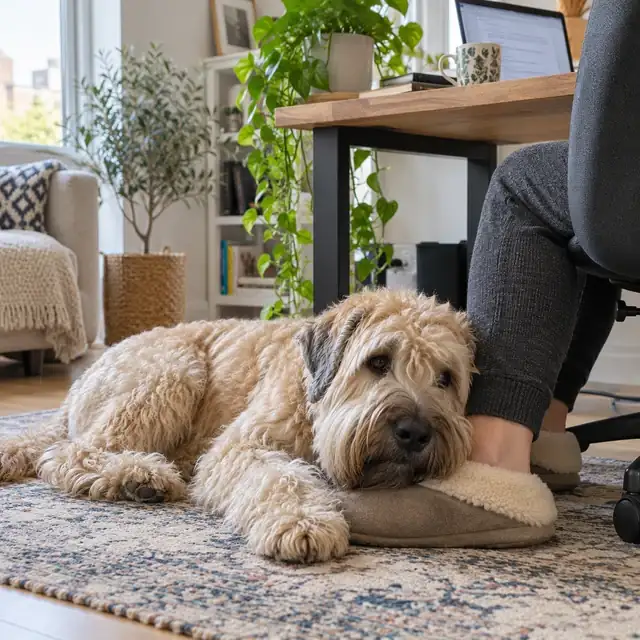
Very high rating: loyal, gentle, happy to meet people. Behavior depends on upbringing.
THE PAW CATALOG
Origin: Ireland
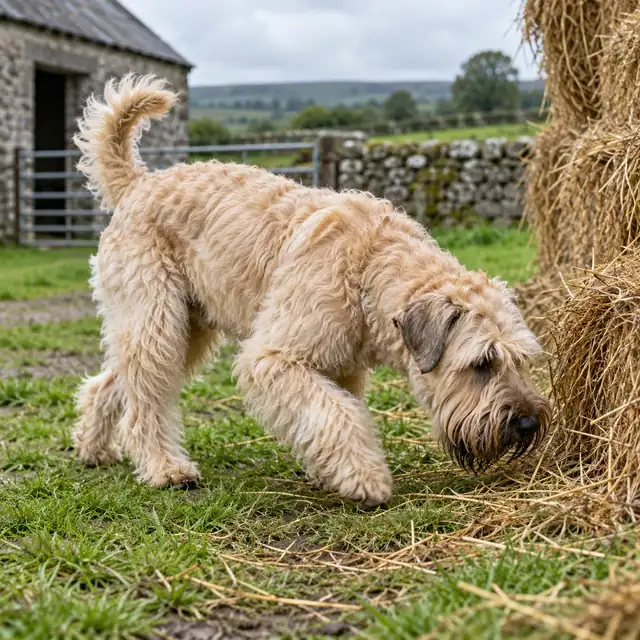
It comes from Ireland, where it was a farm dog alongside the Kerry Blue Terrier and the Irish Terrier: guarding the farm, catching rodents and herding livestock. The Irish Kennel Club recognized the breed in 1937. A pair of dogs came to the US in the late 1940s, and the AKC recognized the breed in 1973.
Soft Coated Wheaten Terrier is an Irish medium (43-48 cm, 14-18 kg) terrier with a soft, silky coat of a wheat shade. Lively, loyal, gentle, but persistent. It needs daily activity, firm and patient training and very frequent hair care.
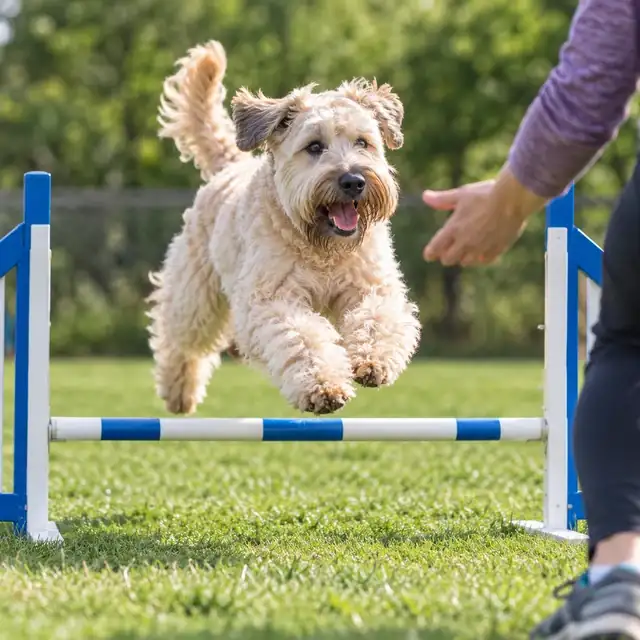
Suitable for active families. Needs daily movement, attention and especially hair care. Desires contact with people and can jump for joy.
High: daily walk plus running and games.
The terrier is persistent and stubborn, so firm, patient training and positive reinforcement are required; does not tolerate rough methods. Best suited to an experienced owner.
The wool is combed at least three times a week so that it does not stray. The longer fur on the face is trimmed, the ears are cleaned weekly, the nails and the fur between the pads are trimmed. A professional groomer helps.
Gentle and playful, but bouncy and loud. Games with children under supervision.
The terrier instinct is preserved, so be careful with small animals. Gets along with dogs during socialization.
Estimates help compare breeds. For zooaggression, 5/5 means less tendency to aggression towards dogs. The behavior and health of a particular dog depend on many factors.
Very high rating: loyal, gentle, happy to meet people. Behavior depends on upbringing.
Average score: smart, but stubborn; soft learning is required.
Average score: Terrier instinct needs control.
In the British cohort, the median lifespan of the breed was 13.7 years. The absence of the mentioned risk does not prove the absence of hereditary diseases.
Very low rating: long, soft coat needs frequent brushing and regular clipping.
Breed screening: there are few descriptions of hereditary diseases of the "Soft Coated Wheaten Terrier" breed. Ask the breeder for the written results of the parents' examinations and the current requirements of the club.
Musculoskeletal system: the growth and load of the "Soft Coated Wheaten Terrier" breed should correspond to its age. Lameness, pain, or reluctance to move require a veterinary examination.
Eyes and heart are checked during routine examinations. The need for individual tests is determined by club recommendations and the dog's age.