Human orientation
Average rating: devoted to family, mistrustful of strangers. Behavior depends on upbringing.
THE PAW CATALOG
Origin: Russia
An indigenous breed of the south of Russia, which grazed and guarded flocks in the steppes. It is believed that it could have been formed by mixing local sheepdogs with greyhounds. The UKC International Register recognized her in 1996 under the name "South Russian Shepherd Dog".
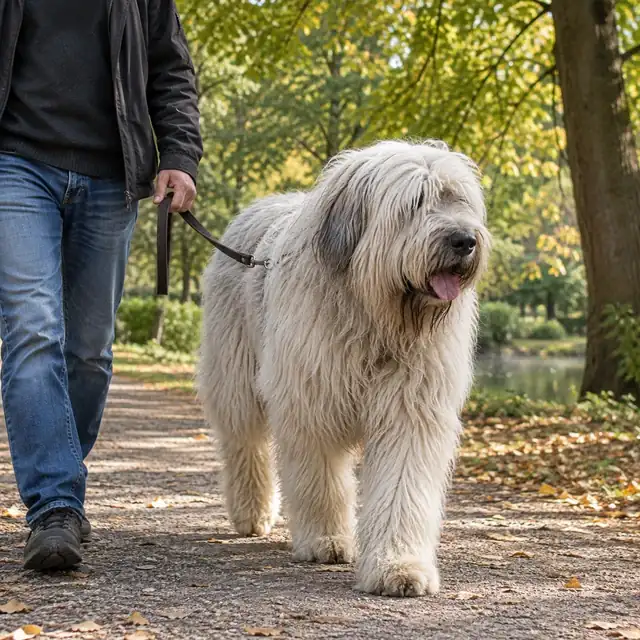
The South Russian shepherd dog is a large (at least 61-64 cm) guard and herding dog with long, coarse, dense fur that can cover the eyes. Serious, distrustful of others, dominant. Needs an experienced owner, space and strict socialization.

This is a dog for an experienced owner with a spacious area and a strong fence, not for an apartment.
High: space, walks and tasks.
Independent and dominant, requires early socialization, strong leadership and consistency. Excessive excitability and timidity in the breed are undesirable.
The coat is long, coarse, with a thick undercoat, needs regular combing, sheds more often. Ears are examined, claws are trimmed.
A strong guarding instinct and size require strict supervision of contact with children, especially strangers.
Territorial and dominant, so acquaintances with other dogs are cautious.
Estimates help compare breeds. For zooaggression, 5/5 means less tendency to aggression towards dogs. The behavior and health of a particular dog depend on many factors.
Average rating: devoted to family, mistrustful of strangers. Behavior depends on upbringing.
Medium-low rating: independent and dominant.
Low score: territorial and dominant.
There is no comparable survival estimate for the breed in the British cohort used. The absence of the mentioned risk does not prove the absence of hereditary diseases.
Low rating: Long coarse coat requires constant grooming.
Breed screening: there is little reliable data on hereditary diseases of the South Russian Shepherd breed, so the results of examinations of both parents should be requested in writing.
Musculoskeletal apparatus: the growth and load of the dog of the "Southern Russian Shepherd" breed is coordinated with its age. If lameness or pain occurs, a veterinary examination is required.
The condition of the eyes and heart is included in the routine examination. The schedule of in-depth checks is coordinated with the veterinarian and the breed club. It is useful to keep the results in the veterinary passport.