Human orientation
Very devoted to the owners, most closely with one person.
THE PAW CATALOG
Origin: Spain
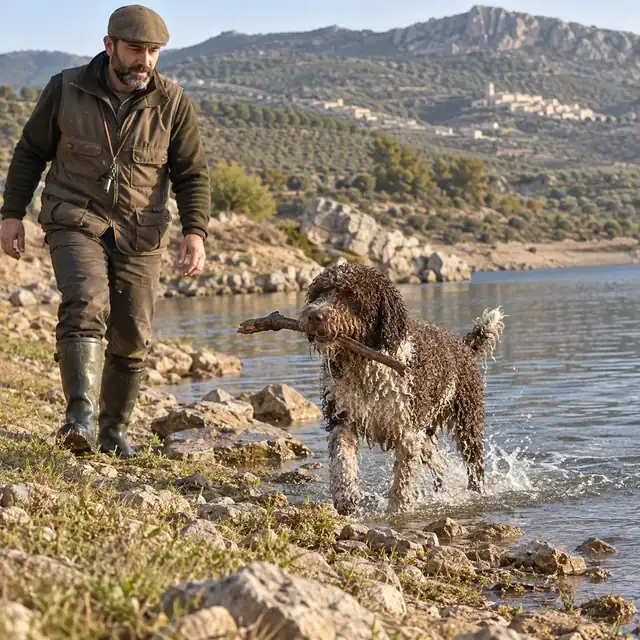
The most common in Andalusia in the south of Spain. It was a versatile farm dog, mainly for herding goats, sheep and cattle, as well as assisting fishermen and waterfowl hunters.
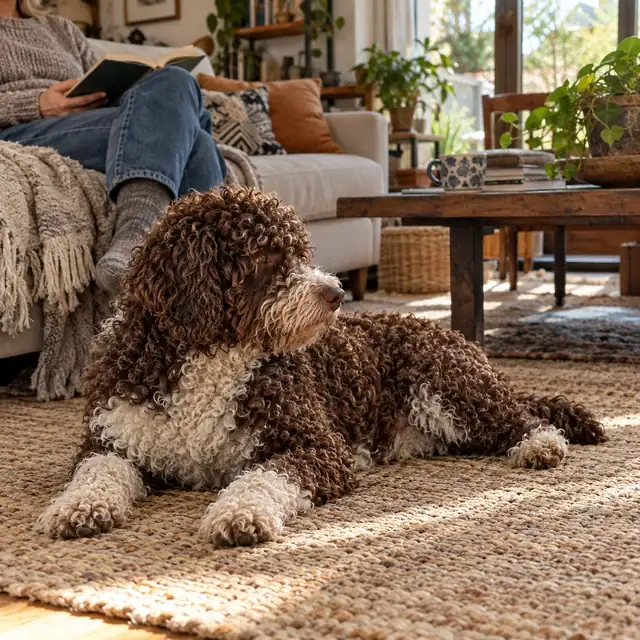
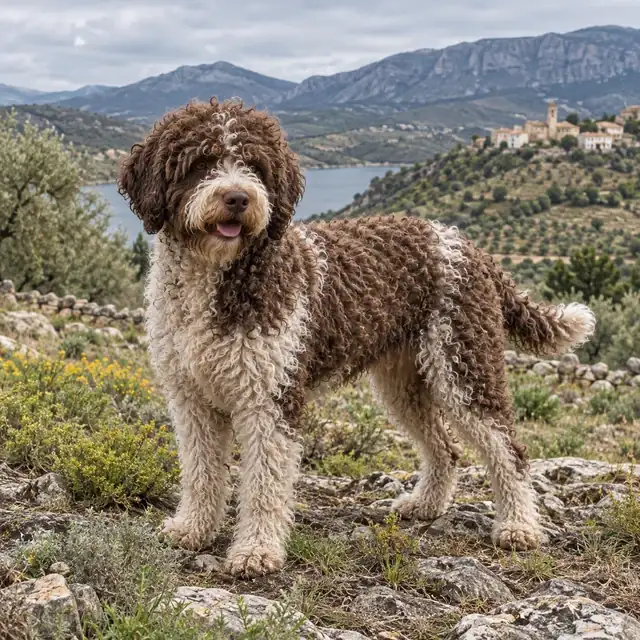
The Spanish Water Dog is a medium (44-50 cm and 18-22 kg in males, 40-46 cm and 14-18 kg in females) dog with curly hair. Strong shepherd and protective instincts, very loyal to the owners. He is often wary of strangers, but faithful, obedient, hardworking and balanced; there should be no shyness. An energetic breed for an active owner.
Suitable for active owners with enough time for walks and mental tasks. You can't leave it alone for the whole day. Physical and mental activity is required.
High A long daily walk and play, as well as mental tasks. Happy to swim and work.
Intelligent, quick learner and eager to please, therefore considered easy to learn. Basic obedience is a must. Classes are varied, with rewards.
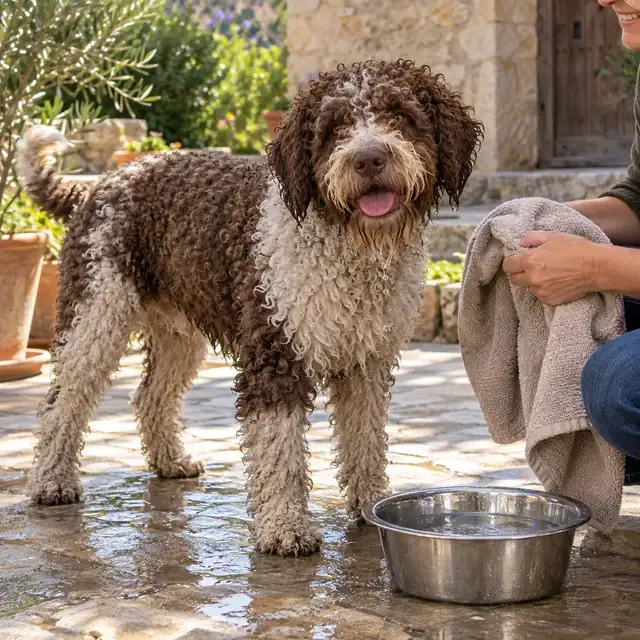
Curly wool is never combed or combed. Instead, they cut the whole body evenly once or twice a year. Ears, teeth and claws are examined.
Affectionate with the whole family, but is most closely attached to the main human-guardian. Herding instincts can lead to chasing small children, so children and the dog should always be supervised.
The herding instinct can be manifested towards other animals. Acquaintances are carried out gradually, early acquaintances help.
Estimates help compare breeds. For zooaggression, 5/5 means less tendency to aggression towards dogs. The behavior and health of a particular dog depend on many factors.
Very devoted to the owners, most closely with one person.
Intelligent, quick learner and eager to please.
A strong herding instinct can be manifested towards other animals.
In the British cohort, the median lifespan of the breed was 13.7 years; small sample: 37 deaths. Among the described breed risks: hip dysplasia; examination of the parents is confirmed with the veterinarian.
Curly wool requires a special approach: cutting instead of combing.
Dysplasia of the hip joints: the results of examinations of both parents are requested. A flat surface and moderate walks help the joints during the growing season. Stiffness after rest is not attributed to age without an examination.