Human orientation
Devoted to his family, calm and serious.
THE PAW CATALOG
Origin: Italy
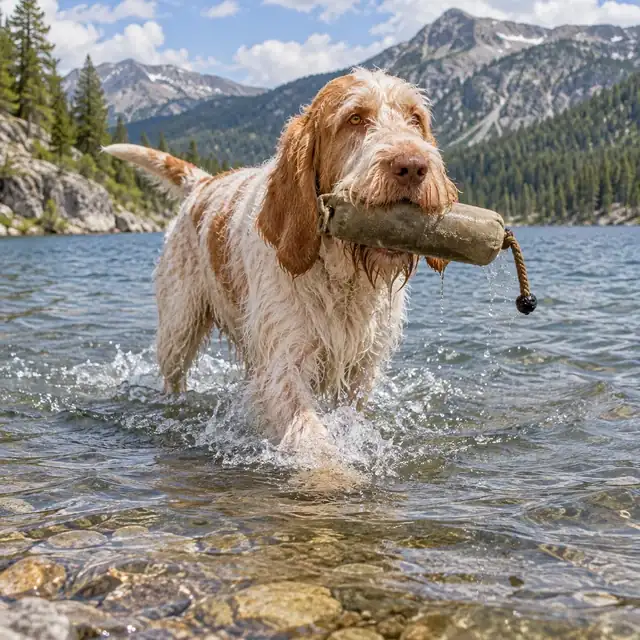
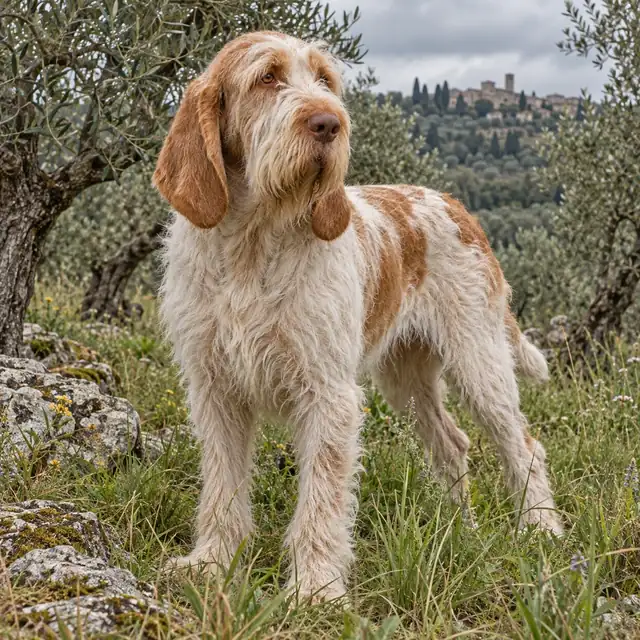
An ancient Italian breed, which, according to legend, is about 2500 years old. It was bred for hunting, standing and retrieving game. The name comes from the thorny undergrowth of Piedmont. Numbers plummeted during World War II, but rebounded in the 1950s. It is also called the Italian Griffin.
The Italian Spinone is a large (59-69 cm and 34-39 kg in males, 58-64 cm and 29-34 kg in females) hard-haired, fluffy. Gentle, patient, affectionate and devoted to the family, usually friendly to strangers. Intelligent, fearless, hardy, calm and serious, not noisy. Keeps a leisurely, steady pace.

Suitable for families who like leisurely walks. Does not like loneliness. Needs space, but does not go out without work.
Moderate Regular walks, but at a leisurely pace. Does not rush forward.
Intelligent, but independent and can be stubborn, so training is a must. Basic obedience and early socialization are required. Classes are calm, with a reward.
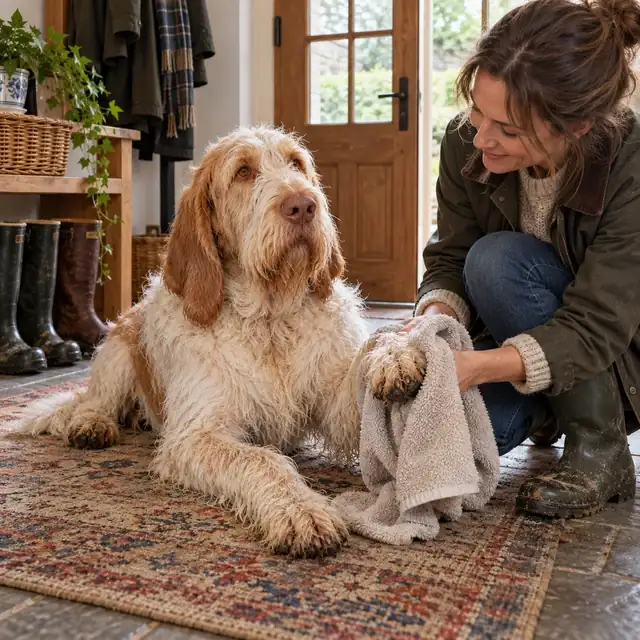
The coat is combed once or twice a week and trimmed to remove dead hair. Muzzle, beard and paws are trimmed more often. Ears are regularly cleaned.
Gentle and patient, but due to its size, children and the dog are always under the supervision of an adult.
Kind to other dogs. Acquaintances with cats and small animals are carried out gradually, because this is a hunting breed.
Estimates help compare breeds. For zooaggression, 5/5 means less tendency to aggression towards dogs. The behavior and health of a particular dog depend on many factors.
Devoted to his family, calm and serious.
Smart, but independent and can be stubborn.
Kind to dogs, hunting instinct needs attention.
In the British cohort, the median lifespan of the breed was 11.9 years. Among the described breed risks: elbow joint dysplasia; examination of the parents is confirmed with the veterinarian.
Hard wool requires regular combing and trimming.
Dysplasia of the elbow joints: the breeder is asked to confirm the examinations of both parents. The puppy is not forced to make sharp jumps and long runs while the bones are growing. Lameness is shown to the veterinarian.