Human orientation
High score: loyal and affectionate. Behavior depends on upbringing.
THE PAW CATALOG
Origin: Great Britain
It was formed at the beginning of the 19th century from a bulldog and an extinct Old English terrier; bred for dog fighting. The breed was developed by miners and workers in Staffordshire, and was recognized by the English Kennel Club in 1935.
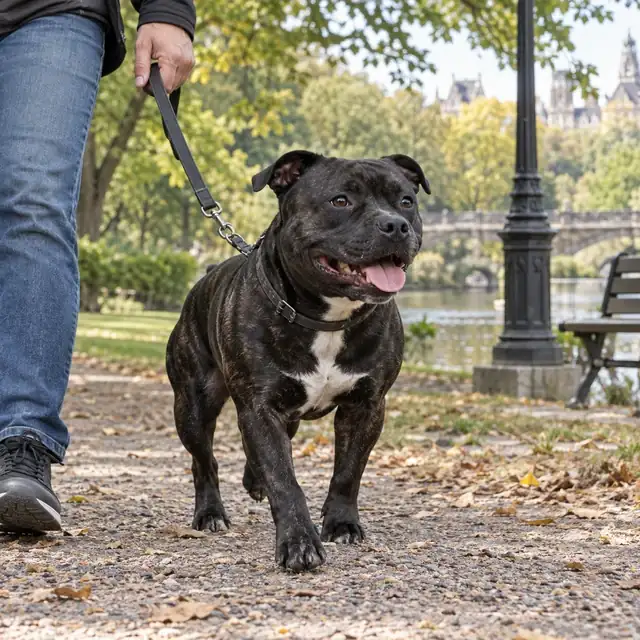
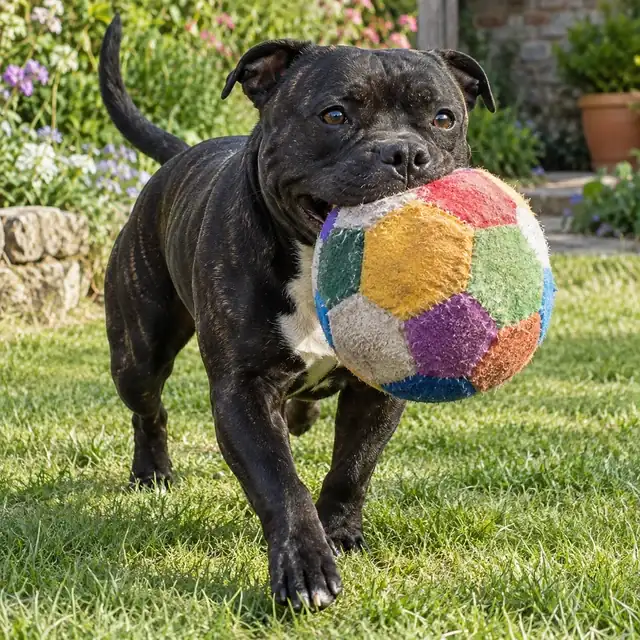
The Staffordshire bull terrier is a compact and very muscular (36-41 cm, 11-17 kg) English terrier with a short dense coat. Brave, loyal to the owner, affectionate and playful. Needs training, socialization and caution with other dogs.
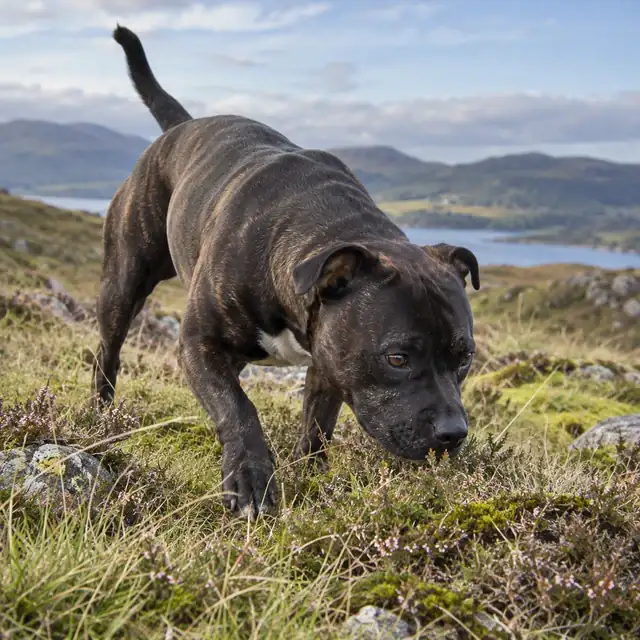
Suitable for owners who will involve the dog in everyday life: running on a leash, fetching, games. Attached to people, he does not tolerate loneliness well.
High: regular walks, games, activities and communication.
Willing to please, but stubborn and gambling. Good manners will have to be cultivated. Early socialization and consistency is a must.
Short dense wool is combed from time to time, bathed as needed. Care is simple.
Described as a wonderful family dog, however, children are careful with him and supervision is a must.
Can be intolerant of other dogs, and the consequences are serious, so always on a leash.
Estimates help compare breeds. For zooaggression, 5/5 means less tendency to aggression towards dogs. The behavior and health of a particular dog depend on many factors.
High score: loyal and affectionate. Behavior depends on upbringing.
Medium-high rating: Willing to please, but stubborn.
Medium-low rating: Intolerant of other dogs.
In the British cohort, the median lifespan of the breed was 12.0 years. Among the described breed risks: dysplasia of the hip joints, dislocation of the patella, cataract; examination of the parents is confirmed with the veterinarian.
High score: short coat.
Hip Dysplasia: The breeder is asked to confirm examinations of both parents. The puppy is not forced to make sharp jumps and long runs while the bones are growing. If the dog is limping or reluctant to get up, it is examined by a doctor.
A dislocation of the patella is often noticeable by short "bounces" on the hind leg during running. Mild forms are often only controlled, and severe ones may require surgery. Excess weight is removed because it increases the load.
Cataract: clouding of the lens; regular examinations by a veterinary ophthalmologist, changes in vision or the appearance of the eyes are not ignored.