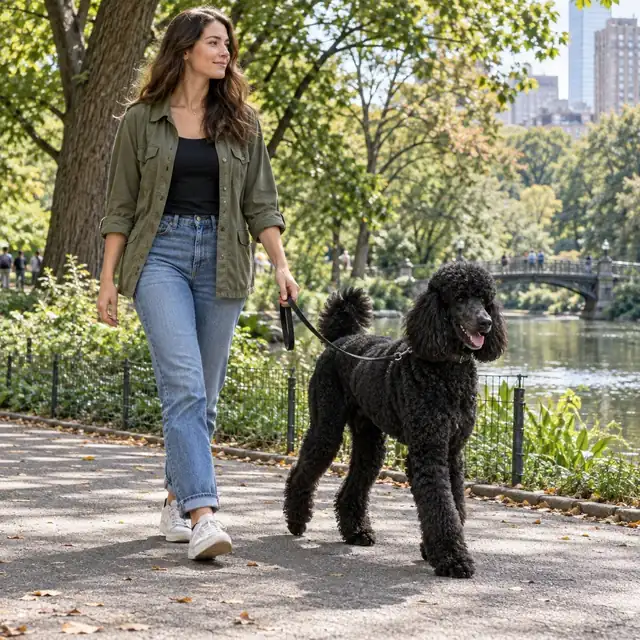
Human orientation
Very high score: sensitive and attached to people. Behavior depends on upbringing.
THE PAW CATALOG
Origin: France
Ancient European Water Retriever with curly coat. Poodles worked for fetching game, grazing, guarding and performing on stage. Popularity increased in the 1920s and 1930s; nowadays, most poodles share a common ancestor. Due to the narrow circle of founders, breeders monitor genetic diversity.
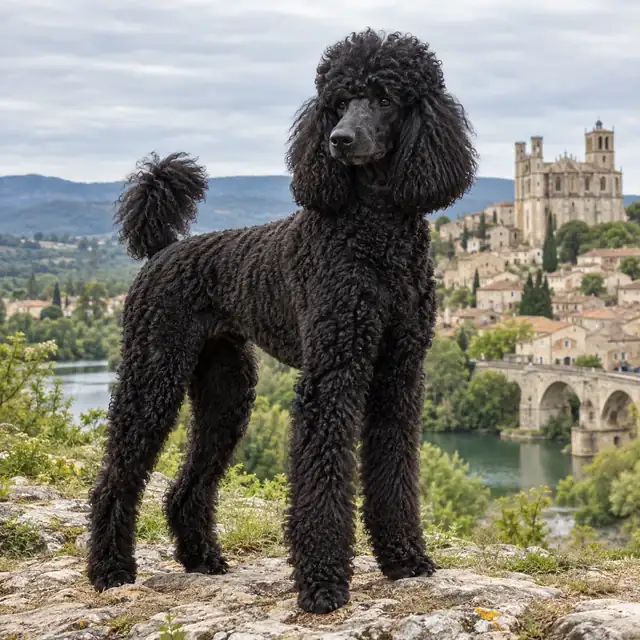
A large poodle is a tall (usually 51-69 cm, 16-29 kg) intelligent and active dog with curly hair. Proud, sensitive, willing to play and work. Needs daily exercise and mental challenges, regular grooming and health checks.
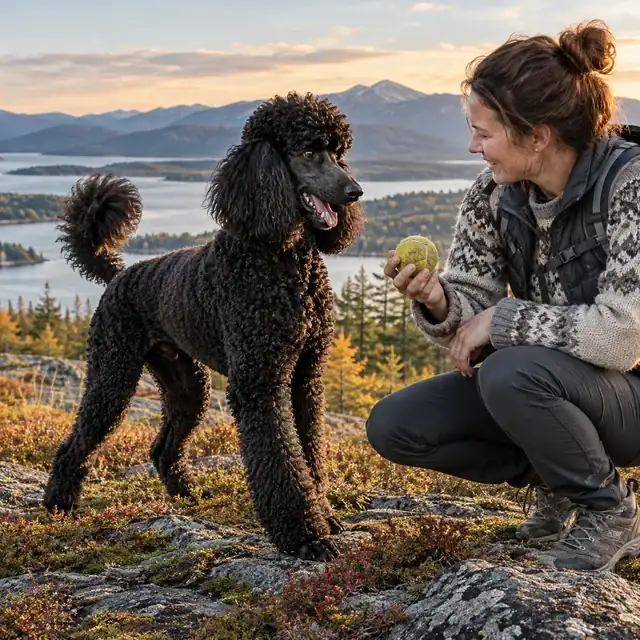
Suitable for active families. He likes to be around people, so he does not tolerate loneliness well. Feels good in a house or apartment with sufficient activity.
High: Long walks, swimming, fetch and mind games every day.
Very intelligent, quick learner, good in sports and as a therapy or service dog. Classes are varied, with rewards. Behavior depends on the line: from energetic workers to calm companions.
Curly coats require regular brushing (weekly or more), bathing and trimming approximately every 4-6 weeks. Ears are examined, nails are trimmed, teeth are cleaned.
Generally gets along well with children, but energetic. Supervised games.
Usually peaceful with animals during socialization. The hunting instinct is manifested in some lines.
Estimates help compare breeds. For zooaggression, 5/5 means less tendency to aggression towards dogs. The behavior and health of a particular dog depend on many factors.
Very high score: sensitive and attached to people. Behavior depends on upbringing.
Very high score: one of the smartest.
Average score: socialization is needed.
There is no comparable survival estimate for the breed in the British cohort used. Among the described breed risks: dysplasia of the hip joints, epilepsy, dislocation of the patella; examination of the parents is confirmed with the veterinarian.
Low rating: Curly wool needs constant care and cutting.
Dysplasia of the hip joints: the results of examinations of both parents are requested. A flat surface and moderate walks help the joints during the growing season. Lameness is shown to the veterinarian.
Epilepsy is manifested by convulsive attacks, which must be shown to the veterinarian. The breeder is asked about cases of epilepsy in the pedigree.
Dislocation of the patella is manifested by periodic "jumping" on the hind leg. The doctor assesses the extent of the dislocation, and it depends on whether treatment is needed. Excess weight is removed because it increases the load.
Von Willebrand's disease: a blood coagulation disorder. Before operations and for bleeding, the veterinarian is notified, the results of the genetic test of the parents are requested.
Bloating or stomach upset: feed several times a day in small portions, do not load the dog immediately after eating. A swollen, hard stomach, restlessness and futile urges to vomit are a reason to go to the clinic immediately.