Human orientation
High score: attached to the family. Behavior depends on upbringing.
THE PAW CATALOG
Origin: Great Britain
It originates from Sussex in England and has been recognized since the 1850s. Bred to work all day on heavy clay soil and in dense undergrowth. The only hunting dog that "gives a voice" during work, and hunters find it in the thickets.
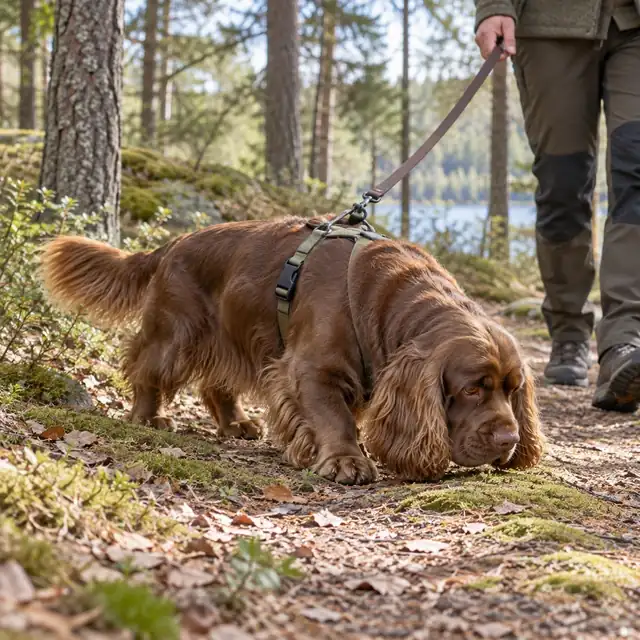
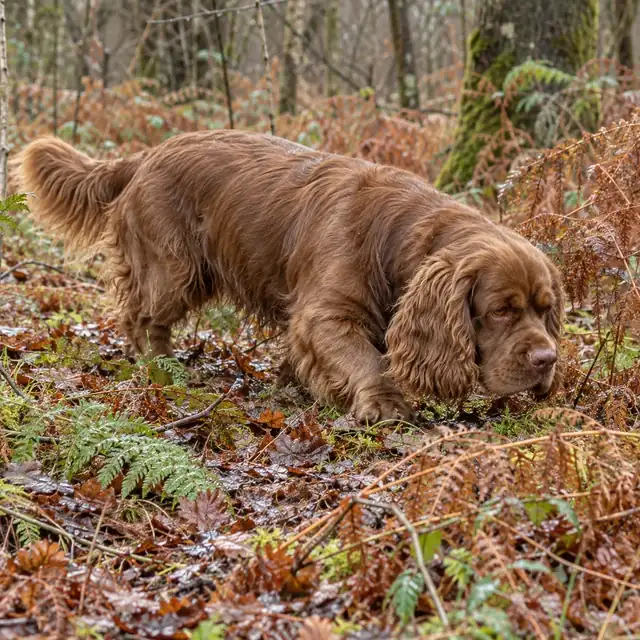
The Sussex Spaniel is a short (38-41 cm), but long and massive (about 22.5 kg) English hunting spaniel with a golden liver coat. Attached to his family, playful, mischievous and loud. Requires daily movement and patience in learning.
Suitable for people who have time for daily walks. Not suitable for an apartment: a bored Sussex Spaniel can make noise and destroy things.
Active and energetic: daily movement and mental tasks.
Birds and small animals are very distracting, so basic obedience is a must. You can do sports: trace work, sense of smell.
Unlike most spaniels, does not need a haircut. The wool is combed regularly, bathed from time to time, and the wool between the fingers is trimmed. The fur under the large ears is trimmed to allow air to circulate and the ear canals to be easier to care for.
Attached to his family. Children are always with an adult.
May be intolerant of other animals in the house, so owners should take this into account.
Estimates help compare breeds. For zooaggression, 5/5 means less tendency to aggression towards dogs. The behavior and health of a particular dog depend on many factors.
High score: attached to the family. Behavior depends on upbringing.
Average score: hunting instincts.
Medium-low rating: Intolerant of other animals.
In the British cohort, the median lifespan of the breed was 13.5 years; small sample: 34 deaths. Among the described breed risks: bloating or stomach twist; examination of the parents is confirmed with the veterinarian.
Average score: coat needs regular combing and ear care.
Bloating or stomach upset: feed several times a day in small portions, do not load the dog immediately after eating. A swollen, hard stomach, restlessness and futile urges to vomit are a reason to go to the clinic immediately. Pyruvate dehydrogenase (PDP1) deficiency and hip dysplasia have also been described: ask parents for test results.