Human orientation
Medium-high rating: devoted to family, reserved towards strangers. Behavior depends on upbringing.
THE PAW CATALOG
Origin: Tibet; FCI patronage
One of the oldest known breeds, originally from the Tibetan Plateau. Nomadic Tibetan and Nepalese tribes used it to protect sheep from wolves, leopards and bears. It is believed that it formed the basis of many mastiff-like breeds.
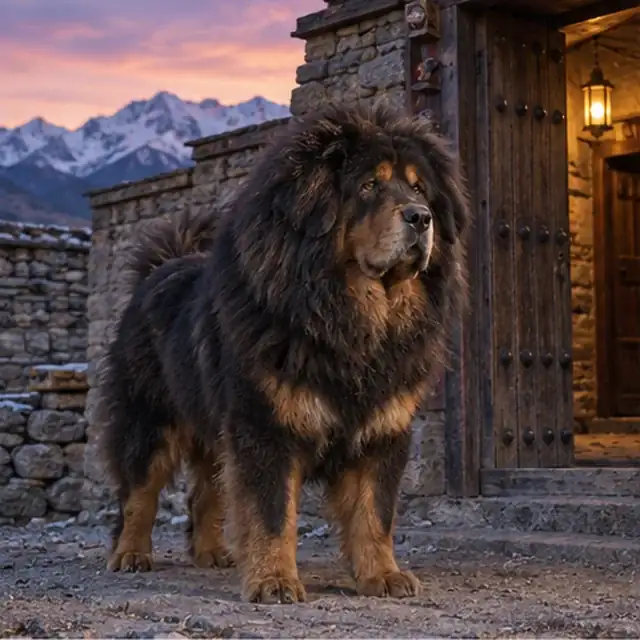
The Tibetan Mastiff is one of the oldest known large dogs (at least 61-66 cm), powerful yet agile, with a thick coat of black, gold, or black-and-tan color. Devoted to his family, protective, independent and reserved with strangers, slowly growing up. Not suitable for beginners.

Suitable for experienced owners with a spacious fenced yard. The protective nature requires thoughtful, careful maintenance.
Moderate: space, fenced territory, regular walks.
Intelligent, but stubborn, so obedience training is recommended. Early socialization is extremely important.
Wool quickly sheds dirt and has almost no strong odor. It molts most abundantly in late winter or early spring, sometimes lighter - at the end of summer; then it is combed more often.
Calm with the family, but the protective instinct and size require strict supervision of contacts with children, especially strangers.
May feel good with a canine companion. Acquaintance with other people's animals is cautious.
Estimates help compare breeds. For zooaggression, 5/5 means less tendency to aggression towards dogs. The behavior and health of a particular dog depend on many factors.
Medium-high rating: devoted to family, reserved towards strangers. Behavior depends on upbringing.
Medium-Low Rating: Smart but stubborn.
Average score: socialization is needed.
In the British cohort, the median lifespan of the breed was 13.3 years; small sample: 22 deaths. Among the described breed risks: hip dysplasia, thyroid dysfunction, epilepsy; examination of the parents is confirmed with the veterinarian.
Medium-low rating: thick coat and size.
Dysplasia of the hip joints: the results of X-ray evaluations of the parents are studied before the purchase. The puppy is not forced to make sharp jumps and long runs while the bones are growing. If the dog is limping or reluctant to get up, it is examined by a doctor.
Dysfunction of the thyroid gland: hormones are checked for inactivity, weight gain, and skin problems.
Epilepsy: after the first attack, the dog is examined by a doctor. It is useful to record the duration and frequency of attacks on video or in notes.
Eyelid rolling (entropion): The eyelids roll inward and irritate the cornea. Tearing, squinting or redness of the eye requires a veterinary examination.
Inverted eyelids (ectropion): the lower eyelid hangs down, the eye is prone to irritation. The eyes are examined regularly, for signs of inflammation, consult a veterinarian.