Human orientation
Average rating: close bond with the flock. Behavior depends on upbringing.
THE PAW CATALOG
Origin: Traz-us-Montish, Portugal
It comes from the Tra-Uz-Montish y Alto Douro region in northeastern Portugal, where it remains rare. Its origins are linked to Iberian mastiffs and herd crossing routes. Related to the Rafeira do Alentejo, and the breeds diverged when livestock migrations were restricted. The version of kinship with the Tibetan Mastiff has not been proven. The FCI provisionally recognized the breed for 2020. Individual dogs were exported to the United States for research on the protection of livestock from wolves.
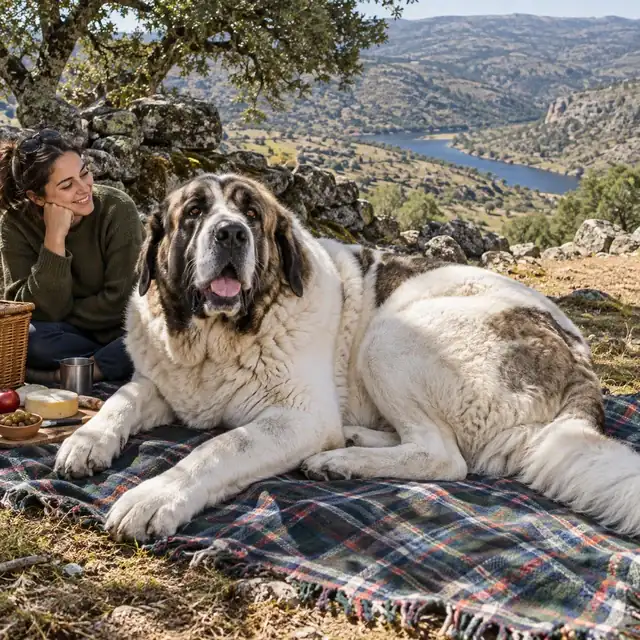
The Transmontane Mastiff is the largest Portuguese breed (68-85 cm, 50-75 kg), a guard dog for the protection of flocks with a double coat of white with large spots or solid color. Calm, reserved, independent. Requires a large area, experience and positive methods of education.
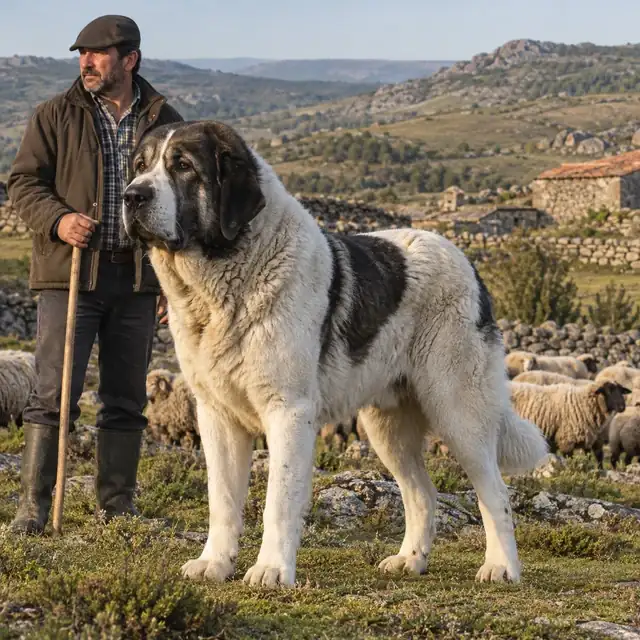
This is a dog for a large area, not suitable for an apartment or a chain. Digs under the fence and expands the territory, so supervision is required.
High energy, need a lot of space.
It responds well to positive methods, reacts poorly to punishment and has a long memory. Young males need socialization to reduce dominance. Guards toys and food and is jealous, so owner control is important.
Wool of moderate length is combed regularly, more often during shedding. Ears are examined, claws are trimmed.
Because of their size and guarding instincts, contact with children, especially strangers, is strictly supervised.
Can work in mixed flocks, but males need socialization. Protects herds from wolves, wild boars, foxes and wild dogs.
Estimates help compare breeds. For zooaggression, 5/5 means less tendency to aggression towards dogs. The behavior and health of a particular dog depend on many factors.
Average rating: close bond with the flock. Behavior depends on upbringing.
Average score: learns well with positive methods, but independent.
Medium-low rating: defender of the herd.
There is no comparable survival estimate for the breed in the British cohort used. The absence of the mentioned risk does not prove the absence of hereditary diseases.
Low rating: size and thick coat.
Breed screening: there are few descriptions of hereditary diseases of the Transmontane Mastiff breed. Ask the breeder for the written results of the parents' examinations and the current requirements of the club.
Musculoskeletal apparatus: for the Transmontane Mastiff breed, the load is selected according to age and condition. Limping, pain or reluctance to move is a reason to consult a veterinarian.
During preventive visits, the veterinarian checks the eyes and the heart. The need for individual tests is determined by club recommendations and the dog's age. Ask the breeder what tests the parents have passed.