Human orientation
Average rating: good-natured, but independent hunter. Behavior depends on upbringing.
THE PAW CATALOG
Origin: Hungary
Ancient Hungarian breed: in the Middle Ages it was a favorite of the aristocracy. With the development of agriculture and forestry, it was pushed to remote Carpathian forests. There were two varieties - long-legged for large game and short-legged for small game. At the beginning of the 20th century, the population decreased sharply, and organized breeding resumed in 1968. Today, the long-legged variety remains in Hungary and neighboring Romania, while the short-legged variety has disappeared. In the FCI classification, it belongs to group 6.
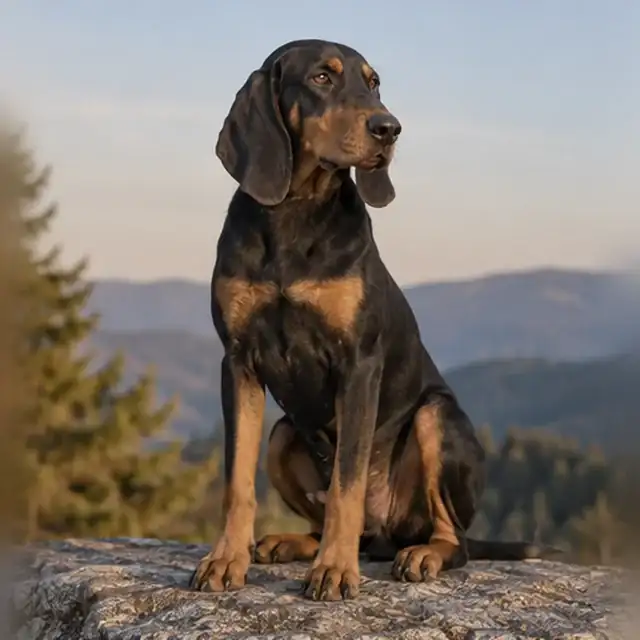
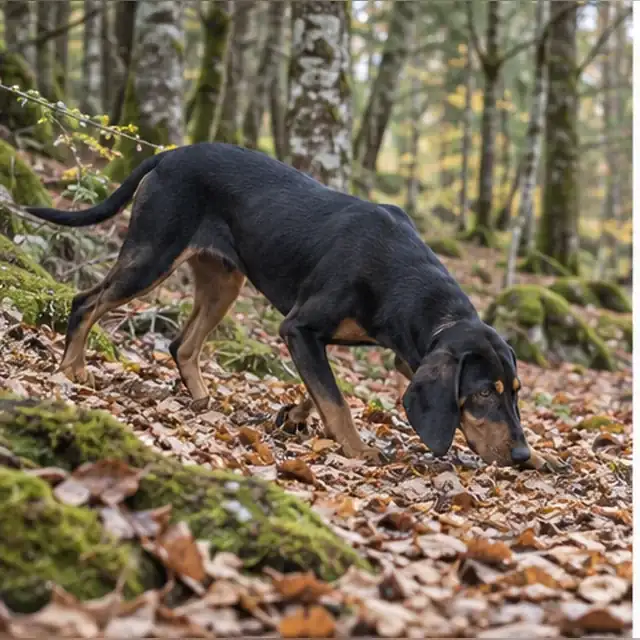
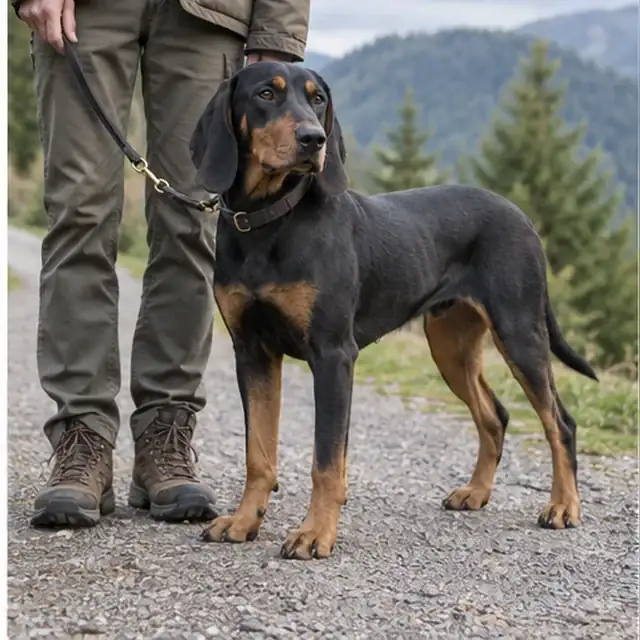
The Transylvanian hound is a large (55-65 cm, at least 25 kg) ancient Hungarian hound with short, dense, black fur with red markings. Good-natured, brave, hardy, calm, but purposeful and lively. Works independently, often far from the hunter.
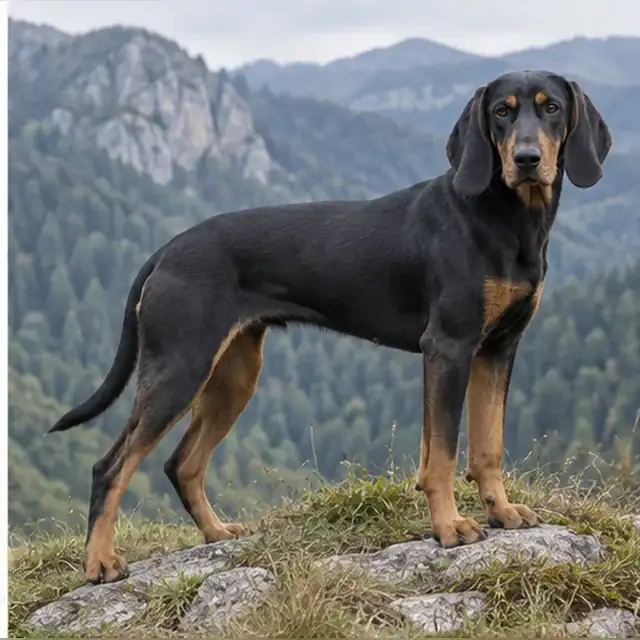
Suitable for hunters and very active owners. Not suitable for an apartment.
High: Long walks, running and sniff work every day. Tolerates extreme weather well.
Works independently, smell and persistence on the trail require a reliable response, patience and protection.
The coat is short and dense, it is enough to comb it once a week. Ears are examined, claws are trimmed.
Good-natured, but due to size and energy contact with children under supervision.
Can work alone or in pairs; gets along with dogs. Game is prey.
Estimates help compare breeds. For zooaggression, 5/5 means less tendency to aggression towards dogs. The behavior and health of a particular dog depend on many factors.
Average rating: good-natured, but independent hunter. Behavior depends on upbringing.
Average score: independent.
Average score: gets along with dogs, game - prey.
There is no comparable survival estimate for the breed in the British cohort used. The absence of the mentioned risk does not prove the absence of hereditary diseases.
High score: short coat.
Pedigree screening: There is little reliable data on the hereditary diseases of the Transylvanian Hound breed, so the results of examinations of both parents should be requested in writing.
Musculoskeletal system: the growth and load of the Transylvanian Hound breed should be age-appropriate. Lameness, pain, or reluctance to move require a veterinary examination.
The condition of the eyes and heart is included in the routine examination. The need for individual tests is determined by club recommendations and the dog's age. Ask the breeder what tests the parents have passed.