Human orientation
High Score: The Weimaraner is usually very attached to people. Actual behavior depends on the dog's socialization and experience.
THE PAW CATALOG
Origin: Germany
The breed was bred in the 19th century in Germany from hunting dogs, in particular bloodhounds and German and French hunting breeds, initially for hunting big game. Weimaraners came to the United States in the 1920s, and the AKC recognized the breed in 1943.
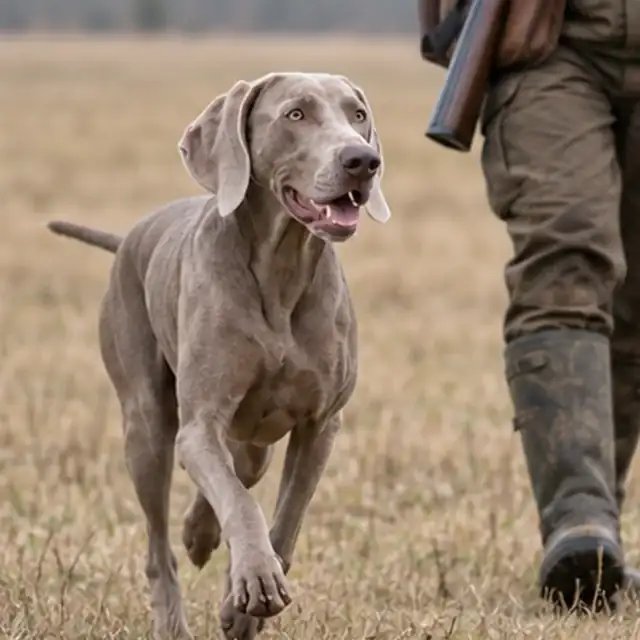
The Weimaraner is a large, silver-gray dog with a fast, elegant gait. Very devoted to people, energetic and intellectual, does not tolerate loneliness. Requires daily intensive exercise, early socialization and attention to the risk of stomach upset.

Suitable for active people who are ready to spend a lot of time with their dog. The Weimaraner is a "Velcro dog" and loneliness causes anxiety and destructive behavior. Not suitable for those looking for a quiet companion.
A healthy adult dog needs one to two hours of activity and mental tasks every day: games, puzzles, dog sports. Not suitable for people looking for a relaxed dog. The load of puppies and elderly dogs is adjusted with the veterinarian.
Intelligent and willing to work, but energetic, so early socialization and consistent training are required. The hunting instinct can work on cats and birds, so the call is practiced from puppyhood.
Short hair is combed approximately once a week. They are bathed no more than once a month, their ears are checked monthly, their claws are trimmed once or twice a month, their teeth are brushed daily.
Usually affectionate and playful, but large and very energetic. An adult monitors the contact, and the rules of a calm game are explained to the child.
Early socialization helps to live peacefully with other dogs. He can perceive cats and birds as prey, so acquaintances are made gradually.
Estimates help compare breeds. For zooaggression, 5/5 means less tendency to aggression towards dogs. The behavior and health of a particular dog depend on many factors.
High Score: The Weimaraner is usually very attached to people. Actual behavior depends on the dog's socialization and experience.
High score: The Weimaraner breed usually learns commands quickly. A variety of tasks are needed so that the dog does not get bored.
Average score: contact with other dogs and animals needs to be evaluated due to the hunting instinct.
In the British cohort, the median lifespan of the breed was 12.8 years. Among the described breed risks: bloating or stomach upset. The examination of the parents is confirmed with the veterinarian.
Average rating: Short coat is combed once a week, but requires a lot of time for activity and careful prevention of stomach upset.
Bloating or twisting of the stomach is an emergency condition to which large, deep-chested breeds are prone. Know the signs: unsuccessful attempts to vomit, distended stomach, restlessness; then go to the vet immediately. For prevention, feed twice a day with a low bowl for slow eating and avoid loads two hours before and after meals. Among other risks, hip and elbow dysplasia, entropion and hypothyroidism are described.