Human orientation
High score: Whippet is strongly attached to people, especially one. Expression depends on socialization.
THE PAW CATALOG
Origin: Great Britain
An English greyhound descended from greyhounds. Smaller, but retains its characteristic aerodynamic shape. Bred for fast races and hunting small game, nowadays it is more often kept as a companion and sportsman.
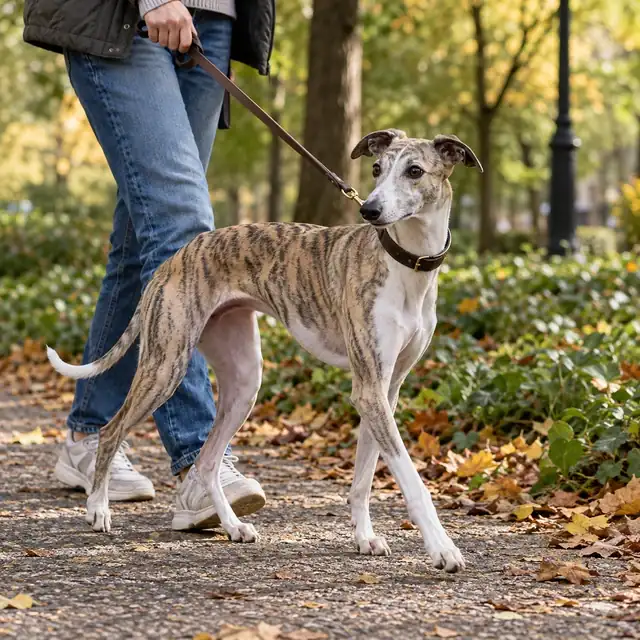
Whippet is a medium-sized English greyhound, resembling a miniature greyhound. Height 44-51 cm, short smooth coat. Meek, vulnerable and balanced, calm at home, and fast on a walk. Needs warmth, gentle nurturing and safe places to run.

Adapts to the apartment and house, willingly lies on the sofa and walks. Closely attached to one person. Sensitive to cold, needs clothing in winter. Short hair almost does not smell.
He is calm at home, but needs regular walks and the opportunity to run from time to time. A safe, fenced area is a must: the whippet will chase moving targets.
Intelligent, eager to please, but sensitive: harsh correction is harmful. Classes require patience and approval. Useful lure-coursing, agility and obedience. Recall is trained on a long lunge.
The short coat is brushed as needed and wiped with a wet glove. They bathe from time to time. Claws are trimmed regularly, teeth are brushed according to schedule.
Gentle and gentle, gets along well with children, especially if they know how to behave quietly. Thin bones require caution from toddlers, and sharp hugs can frighten a sensitive dog.
Whippets belong to the least aggressive breeds towards people and dogs. The chasing instinct remains, so small animals, rabbits and cats outside the home are risky.
Estimates help compare breeds. For zooaggression, 5/5 means less tendency to aggression towards dogs. The behavior and health of a particular dog depend on many factors.
High score: Whippet is strongly attached to people, especially one. Expression depends on socialization.
Average score: Intelligent and willing, but sensitive to pressure, so patient training is required.
High Score: The breed is very peaceful with people and dogs, although caution is required with small animals.
In the British cohort, the median lifespan of the breed was 13.4 years. Among the described breed risks: hearing impairment, heart disease, eye disease; examination of the parents is confirmed with the veterinarian.
High score: short hair requires minimal care, and the rest of the procedures are standard.
Hearing impairment is mentioned among the possible risks of the breed. Hearing is checked by a veterinarian, and the parents are examined by the breeder.
Heart disease is listed as a possible risk. During preventive examinations, the heart is listened to, and prolonged fatigue or cough are not ignored.
Eye diseases are possible in separate lines. Pedigree eyes are examined according to club recommendations, and redness or cloudiness requires examination.