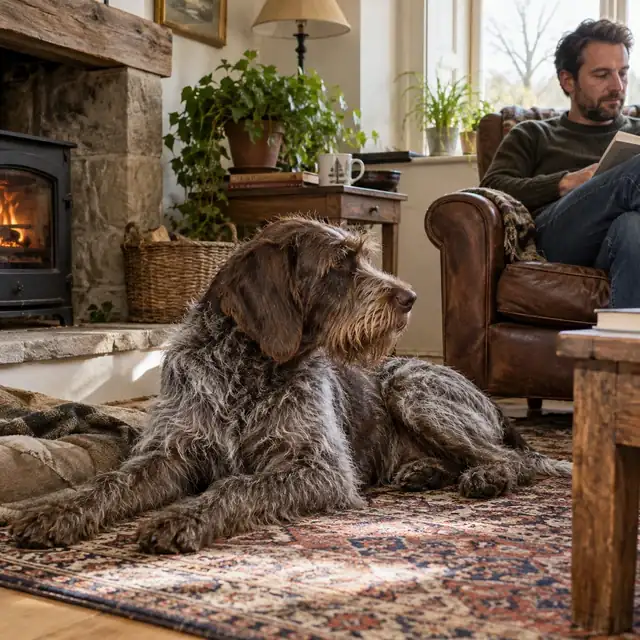
Human orientation
High score: Griffon wants to be close to family and open to people. Behavior depends on socialization.
THE PAW CATALOG
Origin: France
Bred in the 19th century in Central Europe during the period of gundog craze. Dutchman Eduard Korthals bred dogs in the Netherlands, Germany and France. In Great Britain, the club recognized the breed in 1936, where it is called the Korthals griffon.
Korthals's Brindle Griffon is a medium-sized hunting dog (50-61 cm) with a stiff shaggy coat, beard and "eyebrows". Friendly, friendly, very trainable. Needs daily exercise, swimming and exercise, as well as regular ear care.
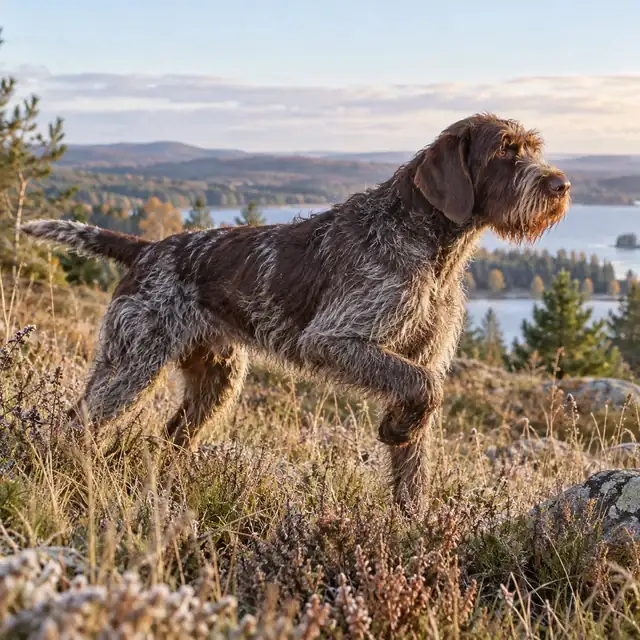
Suitable for active families with a yard. You can't keep it in an enclosure for a long time: the griffon wants to be with people. Open to strangers.
Great physical and mental needs, especially in puppies. Daily movement: fetching, long walks, swimming.
Smart, eager to please and good at studying. Positive reinforcement and a variety of tasks produce the best results. Fetching, olfactory work, swimming are useful.
The wool is combed approximately once a week, more often during shedding. Hanging ears are cleaned regularly, claws are trimmed, teeth are brushed every day if possible.
Gets along great with small children, gentle and open. Energy requires supervision when children play with a large dog.
May have difficulty with other dogs, but early socialization helps. He shows a hunting instinct towards birds and small animals.
Estimates help compare breeds. For zooaggression, 5/5 means less tendency to aggression towards dogs. The behavior and health of a particular dog depend on many factors.
High score: Griffon wants to be close to family and open to people. Behavior depends on socialization.
High score: learns quickly and cooperates willingly.
Average score: possible difficulties with other dogs, and the hunting instinct for small animals needs to be controlled.
There is no comparable survival estimate for the breed in the British cohort used. Among the described breed risks: hip dysplasia; also called eye, heart and elbow dysplasia; examination of the parents is confirmed with the veterinarian.
Average score: the stiff coat is combed weekly and the ears need regular grooming.
Hip dysplasia is less common than in other breeds, but the joints should be evaluated by a veterinarian. The results of the parents' examinations are requested.